Lifestyle
5 Signs of Sleep Apnea Partners Notice Before You Do
By Erica Coleman · August 9, 2026
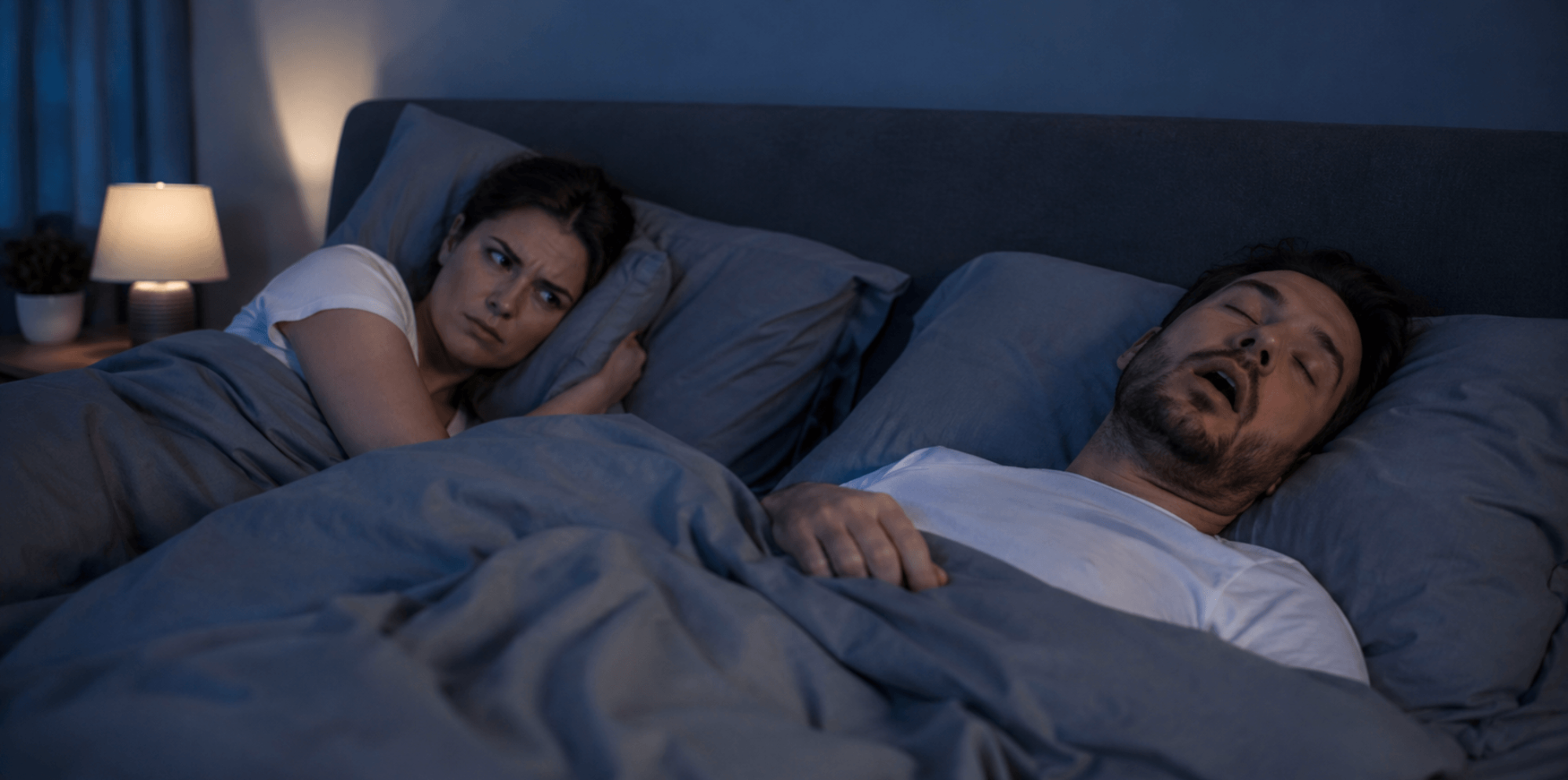
You think you slept eight hours. Your partner watched you stop breathing six times.
Sleep apnea affects an estimated 30 million Americans, and the vast majority — roughly 80% — are undiagnosed. The reason is structural: the person with sleep apnea is unconscious when the symptoms occur. The person most likely to notice is lying next to them. Here’s what partners report.
You stop breathing and then gasp. The hallmark of obstructive sleep apnea is a repeated cycle: breathing stops for 10 to 30 seconds, the body’s oxygen level drops, and the sleeper gasps or chokes to restart breathing. This can happen dozens or even hundreds of times per night. The sleeper rarely wakes fully — but the partner does.
Your snoring has changed. Not all snoring is apnea, but apnea-related snoring has a distinctive pattern: loud snoring punctuated by silence (the apnea event) followed by a gasp or snort. If your snoring has gotten louder, more irregular, or includes pauses your partner can time, the pattern is worth reporting to a doctor.
You’re restless all night. People with untreated sleep apnea move frequently during sleep — shifting positions, kicking, pulling at sheets. The body is reacting to repeated micro-arousals caused by oxygen drops. Partners often describe it as sleeping next to someone who never settles.
You wake up with headaches most mornings. Repeated drops in blood oxygen during the night cause blood vessels to dilate, producing dull headaches that are present upon waking and fade within an hour or two. Morning headaches that occur several days a week without an obvious cause — no hangover, no sinus congestion, no tension — are a classic apnea indicator.
You’re exhausted despite sleeping enough hours. This is what the person with apnea actually notices: pervasive daytime fatigue, difficulty concentrating, irritability, and a constant desire to nap — despite logging a full night in bed. The brain never reaches the deep, restorative stages of sleep because it’s being interrupted all night. Most people blame stress, aging, or poor sleep habits. The cause is often mechanical.
Untreated sleep apnea increases the risk of high blood pressure, heart attack, stroke, type 2 diabetes, and depression. A sleep study — either in a lab or with a home test kit — can diagnose the condition in one night. Treatment typically involves a CPAP machine, which keeps the airway open with gentle pressure, or in milder cases, a dental appliance or positional therapy.
If your partner has been telling you that you snore, gasp, or stop breathing at night, they’re giving you a medical observation, not a complaint.