U.S. News
5 Things to Know Before You Book a Cruise
By Curtis Jones · June 27, 2026
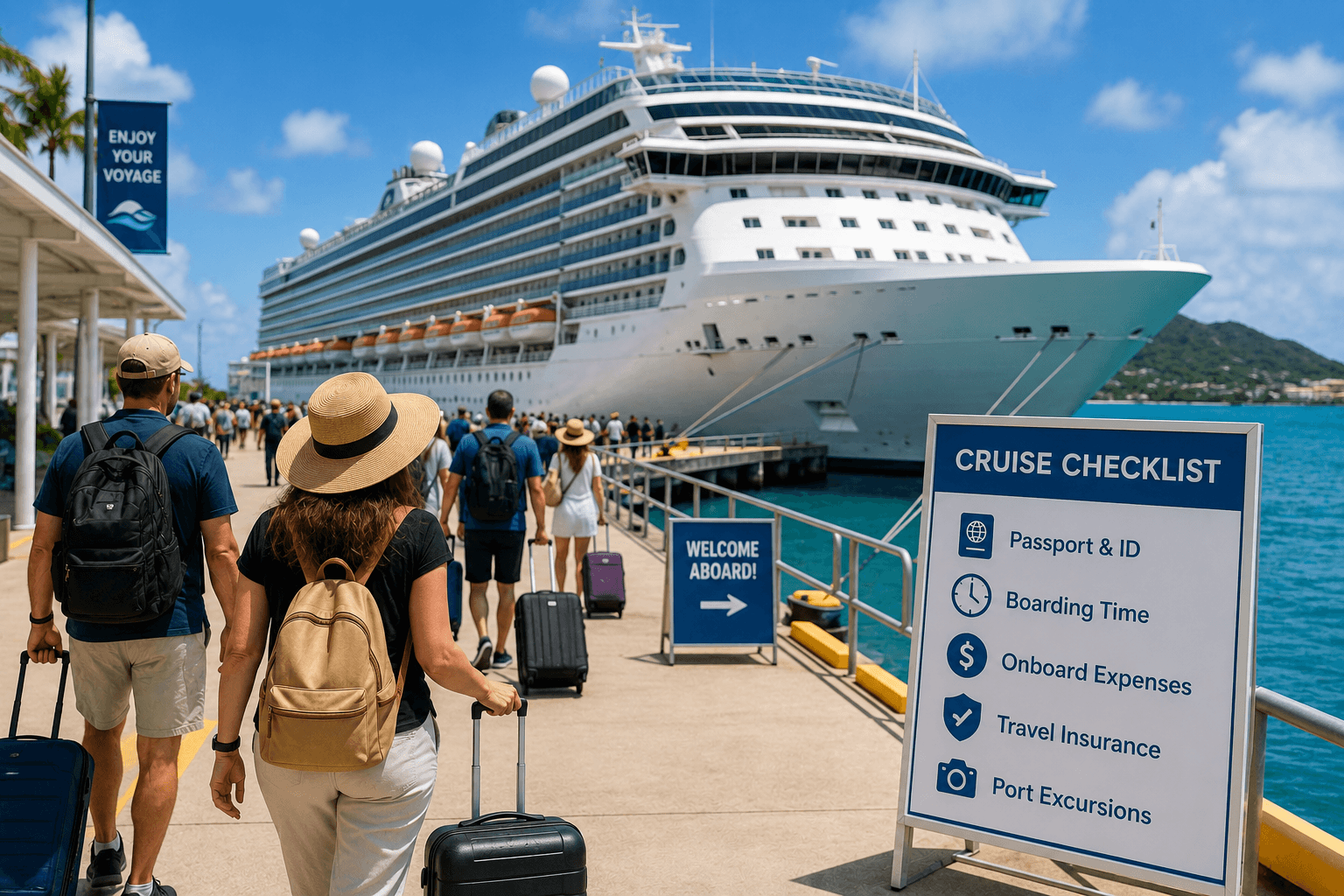
Cruise lines advertise fares starting at $50 per person per night. The actual cost of a cruise — once you add the charges that aren’t included in that headline number — is consistently 40 to 80% higher. Here’s what you need to know before you book.
1. The advertised price excludes port fees, taxes, and gratuities
The fare you see in the advertisement is the base fare only. Port charges and government taxes typically add $100 to $300 per person. Mandatory gratuities — added automatically to your onboard account — run $16 to $20 per person per day on most major lines. On a 7-day cruise for two people, gratuities alone add $224 to $280 that wasn’t in the advertised price. Always compare the total cost — base fare plus taxes plus gratuities — not the headline number.
2. Drink packages, Wi-Fi, and excursions are where the real spending happens
Alcoholic beverages are not included on most mainstream cruise lines. A drink package runs $70 to $100 per person per day. Wi-Fi packages cost $15 to $25 per day for basic access. Shore excursions booked through the cruise line average $80 to $150 per person per port. A couple on a 7-day Caribbean cruise who buys the drink package, Wi-Fi, and two excursions can easily add $2,000 to $3,000 on top of the fare.
3. Travel insurance from the cruise line is almost never the best deal
Cruise lines sell their own trip protection plans — typically $100 to $300 per person — that are heavily marketed during the booking process. These plans frequently offer narrower coverage and higher claim barriers than standalone travel insurance policies from third-party providers. Compare the cruise line’s plan against a policy from a travel insurance marketplace before buying. The standalone policy usually costs less and covers more.
4. Booking through a travel agent often beats booking direct
Unlike hotels and airlines — where direct booking frequently produces the best price — cruises are often cheaper through travel agents who receive group rates, onboard credits, and cabin upgrades that aren’t available on the cruise line’s website. Many cruise-focused agents charge no fee — they’re paid by the cruise line. The savings can be significant, particularly on premium and luxury lines.
5. Cabin location matters more than cabin category
A mid-ship cabin on a lower deck produces less motion sickness than a forward or aft cabin on a higher deck. Interior cabins are the cheapest but have no natural light. Balcony cabins are worth the upgrade for most travelers — the private outdoor space transforms the experience. Avoid cabins directly below the pool deck, the buffet, or the nightclub — noise carries through the floor. The deck plan is available on the cruise line’s website. Study it before you book.
A cruise can be an extraordinary value — especially for families and groups where food, entertainment, and transportation are bundled. But the value calculation only works when you account for the real total cost, not the number in the advertisement.