Lifestyle
5 Things Your Eye Doctor Checks That Most Patients Don’t Ask About
By Erica Coleman · August 2, 2026
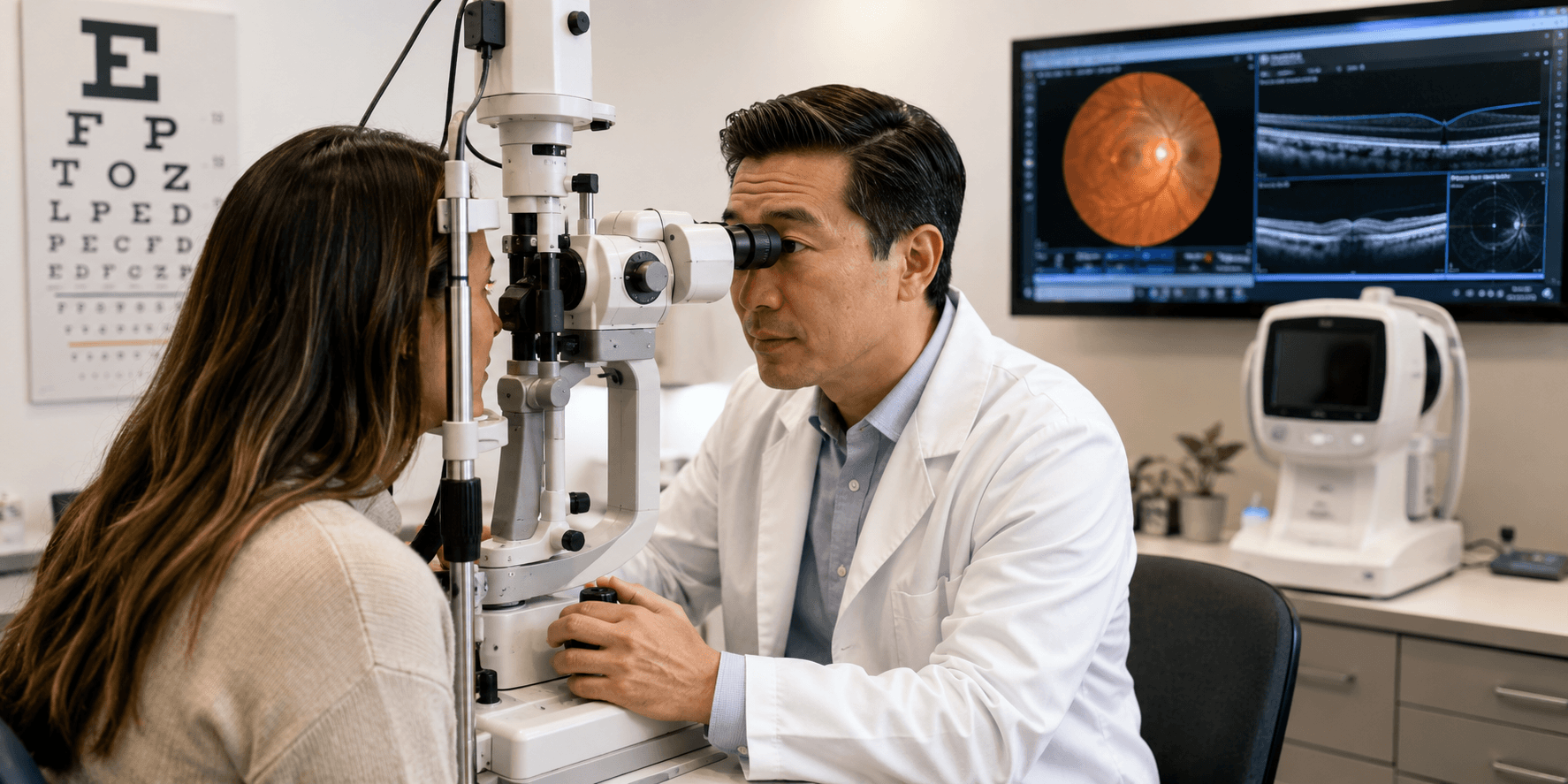
Your annual eye exam isn’t just checking your vision. It’s checking for diseases you don’t know you have.
Most people walk into an eye exam expecting to read letters off a chart and walk out with an updated prescription. What they don’t realize is that the retina is one of the only places in the body where a doctor can directly observe blood vessels without surgery — which means an eye exam can detect systemic diseases that have nothing to do with your vision.
Diabetes — sometimes before you’re diagnosed. Elevated blood sugar damages the tiny blood vessels in the retina, causing them to leak or develop abnormal growths. An eye doctor can spot these changes — called diabetic retinopathy — during a dilated eye exam, sometimes years before a patient is diagnosed with diabetes through blood work. The American Diabetes Association recommends an annual eye exam for anyone with diabetes, but the exam itself can be what triggers the diagnosis.
High blood pressure. Hypertension narrows and damages retinal blood vessels in patterns that are visible during an exam. An eye doctor who notices these changes may be the first provider to flag uncontrolled blood pressure — particularly in patients who haven’t had a physical recently.
High cholesterol. A yellowish ring around the cornea, called arcus senilis, can indicate elevated cholesterol — especially in patients under 60, where it’s considered abnormal. Cholesterol deposits can also appear as plaques in retinal blood vessels, visible during a dilated exam.
Early signs of neurological conditions. Optic nerve inflammation, unusual eye movement patterns, and visual field defects can all be early indicators of conditions like multiple sclerosis, brain tumors, or other neurological disorders. The optic nerve is an extension of the brain, and changes to it are sometimes the first detectable sign that something is happening in the central nervous system.
Autoimmune diseases. Conditions like lupus, rheumatoid arthritis, and Sjögren’s syndrome can cause inflammation inside the eye — a condition called uveitis — that an eye doctor can identify during a routine exam. Dry eye symptoms that don’t respond to typical treatments can also be an early sign of autoimmune disease.
A comprehensive eye exam with dilation takes about 30 minutes and is recommended every one to two years for adults over 40. It’s the only routine exam that gives a doctor a direct, unobstructed view of your blood vessels — and what those vessels reveal may be more important than whether you need new glasses.