Lifestyle
6 Things Your Tree Service Company Hopes You Never Check Before Signing
By Curtis Jones · September 6, 2026
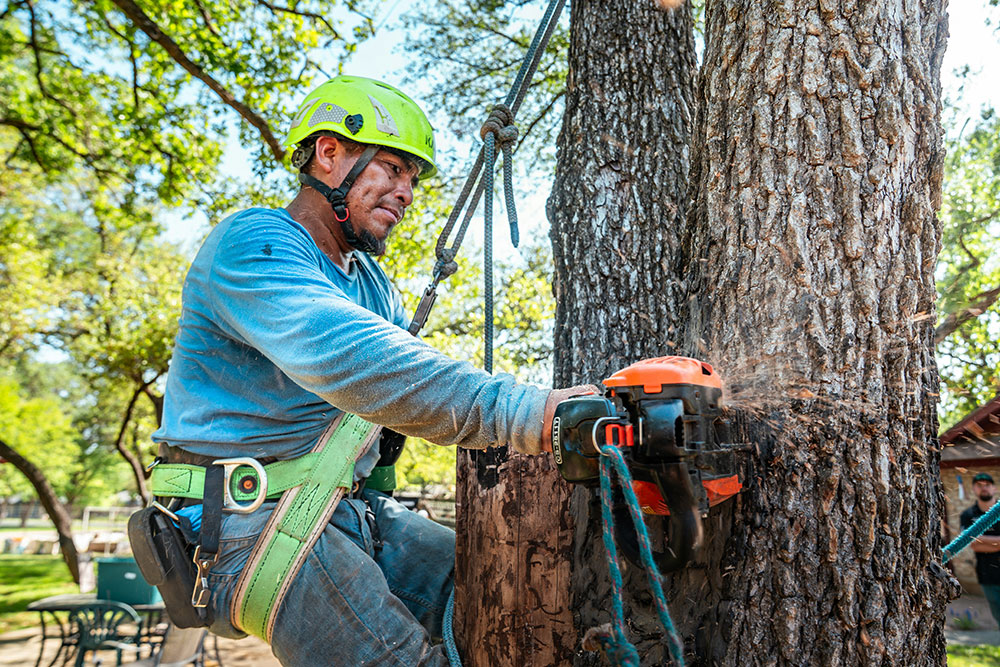
A storm knocked a limb into your yard. A truck with a chainsaw showed up the next morning with a card and a quote. You’re about to hand someone $3,000 to $10,000 to remove a tree — and you have no way to evaluate whether the price, the crew, or the approach is right.
Tree work is one of the most dangerous and least regulated home services in the country. The barriers to entry are a truck, a chainsaw, and a business card. Here’s what to check before anyone climbs a ladder on your property.
They may not carry adequate insurance — and you’ll find out when someone gets hurt. Tree work is among the most hazardous occupations in America. A crew member who falls, is struck by a limb, or drops a tree on your neighbor’s fence creates a liability that goes to whoever’s property it happened on. Ask for a Certificate of Insurance showing both general liability and workers’ compensation — and call the insurance company to verify it’s current. A company that hesitates to produce proof of insurance is one you should not allow on your property.
“Storm chaser” crews appear after every major weather event. Trucks with out-of-state plates offering immediate service at “discounted” rates are a consistent post-storm problem. They take deposits, perform partial or substandard work, and leave. They’re not licensed locally, they carry minimal insurance, and they’re gone before you discover that the stump was left, the debris wasn’t hauled, or the remaining tree is now more dangerous than before.
The quote should specify exactly what’s included. A tree removal quote of $4,500 can mean different things at different companies. Does it include stump grinding? Debris hauling? Branch chipping? Cleanup? Log removal? If the quote is a single number without line items, you can’t compare it fairly — and the items not mentioned will appear as add-on charges once the crew is in your yard.
Topping a tree is the worst thing you can do to it — and some companies still recommend it. “Topping” — cutting the main branches back to stubs — is condemned by the International Society of Arboriculture and virtually every tree care standard. It destroys the tree’s structure, produces weak regrowth that’s more likely to fail in future storms, and shortens the tree’s lifespan. A company that recommends topping is either unqualified or selling you a service that creates future revenue through the problems it causes.
An ISA-certified arborist provides a different level of assessment. The International Society of Arboriculture certifies arborists who have passed a comprehensive exam and met experience requirements. An ISA-certified arborist can assess whether a tree actually needs removal or can be preserved through pruning, cabling, or structural support — options a removal-focused crew won’t mention because they don’t profit from keeping the tree alive.
Your municipality may require a permit — and removing a tree without one can result in fines. Many cities and counties require permits for removing trees above a certain diameter, particularly in historic districts or protected zones. The homeowner — not the tree company — is typically responsible for obtaining the permit. Removing a protected tree without one can result in fines of $500 to $10,000 or more. Check with your city’s planning or forestry department before any tree is cut.