Politics
Supreme Court Justices Jackson and Alito Attack Each Other Publicly
By Mike Harper · May 5, 2026
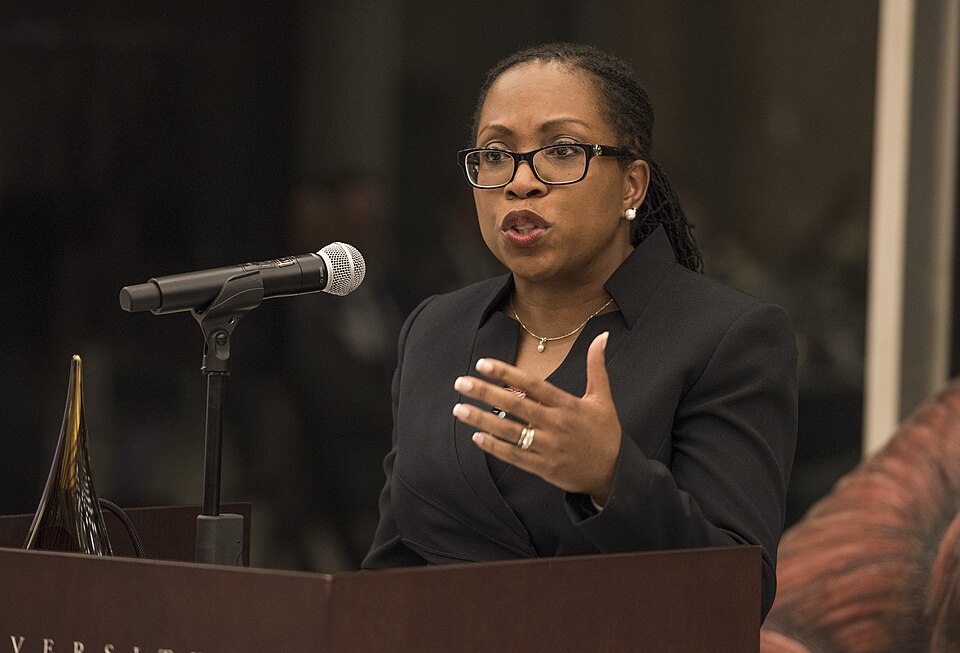
Supreme Court justices disagree in writing all the time. What happened Monday night was different — a public exchange between two justices that Court watchers described as remarkably raw, triggered by what was technically a one-paragraph procedural order.
The Supreme Court granted Louisiana Republicans’ request to immediately finalize last week’s blockbuster Voting Rights Act ruling, bypassing the standard 32-day waiting period before a decision is formally sent back to a lower court. The practical effect: Louisiana can now immediately redraw its congressional maps, eliminating one of its two majority-Black districts, ahead of this year’s midterm elections. The state has already suspended its primaries to allow the process.
Justice Ketanji Brown Jackson, the only justice to note a dissent, did not hold back.
She wrote that developments following last week’s ruling “have a strong political undercurrent” — that Louisiana’s redistricting effort “unfolds in the midst of an ongoing statewide election, against the backdrop of a pitched redistricting battle among state governments that appear to be acting as proxies for their favored political parties.” She noted that in the last 25 years, when one litigant objected to fast-tracking, the Court had only granted the request twice. By doing so now, she argued, the majority was effectively taking Louisiana’s side in an active political dispute.
Justice Samuel Alito, who authored last week’s original ruling, responded in five paragraphs that matched Jackson’s temperature exactly.
He framed the disagreement in stark terms: “The dissent would require that the 2026 congressional elections in Louisiana be held under a map that has been held to be unconstitutional.”
The stakes behind the procedural argument are real. With the judgment now issued, a lower federal court can set the next steps for Louisiana’s redistricting — steps that are expected to result in one fewer majority-Black district, creating a Republican pickup opportunity ahead of November. Two other states — Tennessee and Alabama — have already launched redistricting efforts in the wake of last week’s ruling.
The map war that began with Texas and has now touched California, Virginia, Florida, Louisiana, Tennessee, and Alabama is moving faster than anyone expected — and the Supreme Court, by issuing Monday’s order, just made the timelines shorter.
Both Jackson and Alito put their frustration in writing. Both of them published it. The Court’s internal temperature, two days after its most consequential voting rights decision in decades, is running hot.