Lifestyle
What Happens to Your Muscles After 50 That Nobody Explains to You
By Erica Coleman · September 9, 2026
You can’t open the jar you opened last year. The stairs feel harder. You assume it’s age. It is — but it’s a specific, measurable, and reversible process that has a name your doctor probably hasn’t mentioned.
Sarcopenia — the progressive, age-related loss of muscle mass and strength — begins around age 30, accelerates sharply after 50, and by age 80 can claim 30% to 50% of your muscle mass. It’s one of the most consequential health conditions affecting older adults, and one of the least discussed — because most people assume the weakness is inevitable rather than treatable.
You’re losing muscle faster than you think. Starting in midlife, the body loses roughly 0.5% to 1% of its muscle mass per year. Muscle strength declines even faster — 1.5% to 5% per year after age 50, according to University Hospitals family physician Dr. Susan Ratay. By your 70s, you may have lost 20% to 40% of the muscle you had at 30. The loss is invisible on the scale because fat often replaces the muscle at the same weight.
Your metabolism is slowing because you’re losing the engine that drives it. Muscle is metabolically active tissue — it burns calories at rest. As muscle mass declines, your basal metabolic rate drops proportionally. The “midlife weight gain” most people blame on diet or hormones is at least partly caused by having less calorie-burning tissue. The weight goes up not because you’re eating more but because your body needs less — and the muscle that would have burned the surplus is gone.
Your balance is deteriorating and falls become more dangerous. Sarcopenia directly impairs balance, coordination, and the ability to recover from a stumble. The postural muscles — the ones that keep you upright without thinking — weaken along with everything else. After age 65, falls are the leading cause of injury death. The connection between muscle loss and fall risk is direct, measurable, and under-discussed.
Women lose muscle faster after menopause. The decline in estrogen during menopause contributes significantly to accelerated muscle loss. Research shows declining estradiol is associated with reductions in muscle mass, strength, and neuromuscular function that exceed what age alone would predict. Women who don’t address muscle loss during and after menopause face a steeper decline than men of the same age.
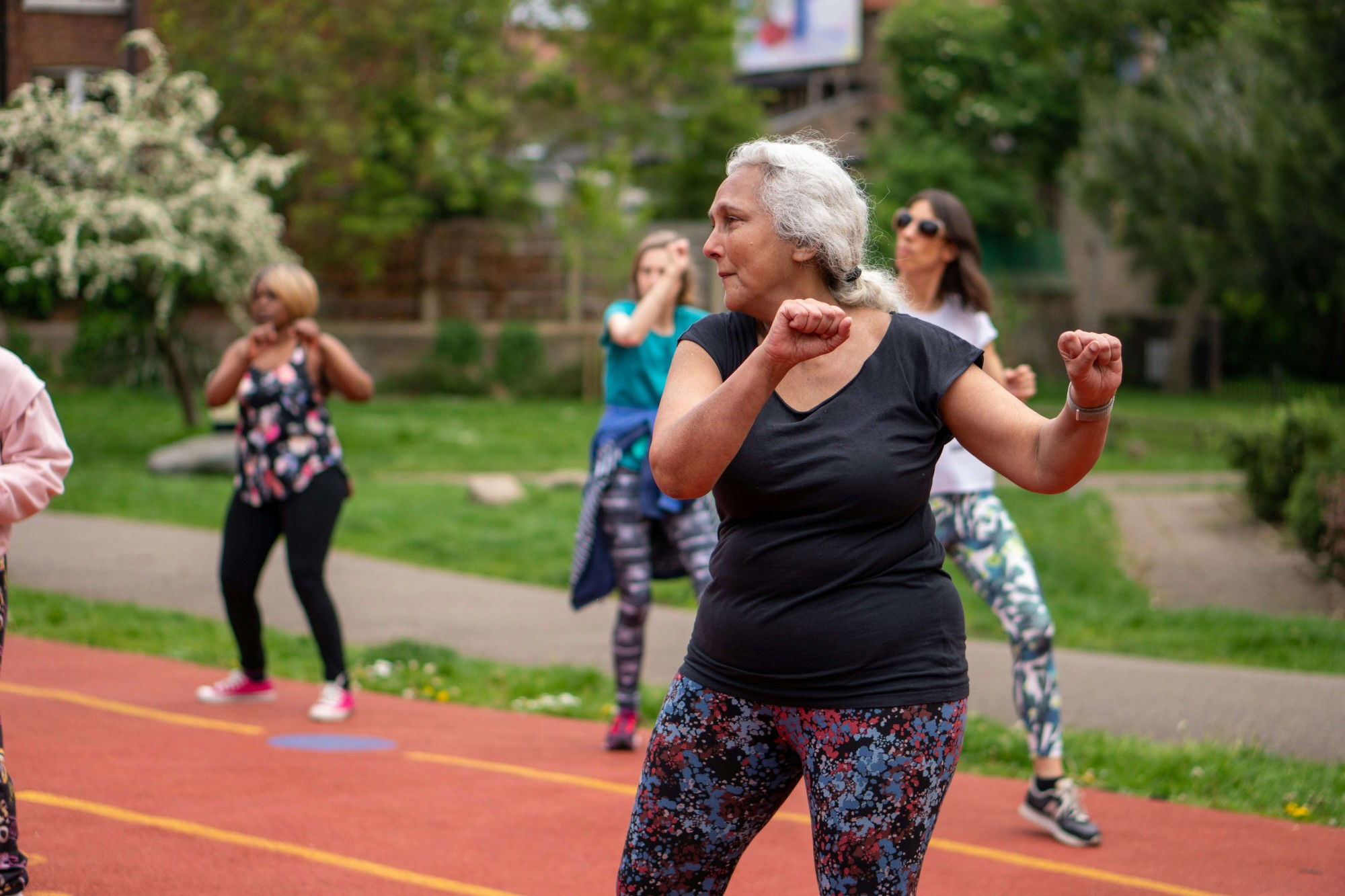
The fix works at any age — but most people aren’t doing it. The single most effective intervention for sarcopenia is resistance training — two to three sessions per week targeting all major muscle groups, combined with protein intake of 1.2 to 1.6 grams per kilogram of body weight per day. Research consistently shows that people in their 60s, 70s, 80s, and even 90s gain significant muscle mass and strength from resistance training. Walking is good for your heart. It doesn’t reverse muscle loss. Lifting — even bodyweight exercises, bands, or light dumbbells — does.
The muscle you’ve lost is not gone permanently. But every year you wait makes rebuilding harder. The conversation your doctor should have started at 50 — about protein, resistance training, and the name of the condition causing your weakness — is the one most worth having now.