Lifestyle
6 Grocery Store Tricks That Make You Spend More Than You Planned
By Erica Coleman · June 26, 2026
The average American household spends approximately $475 per week on groceries — up more than 25% since 2020. A significant portion of that increase is inflation. But a meaningful portion is also the result of store design, product placement, and pricing strategies that are specifically engineered to make you buy more than you intended. Here are six of the most effective.
1. Essential items are in the back of the store
Milk, eggs, bread, and meat are almost always at the back or the perimeter. This is not an accident. Placing the items you came for as far from the entrance as possible forces you to walk past hundreds of other products. Every aisle you pass increases the odds you pick up something unplanned. The fix: know what you need, move through the perimeter first, and resist the pull of the center aisles unless something specific is on your list.
2. Eye-level shelves carry the highest-margin products
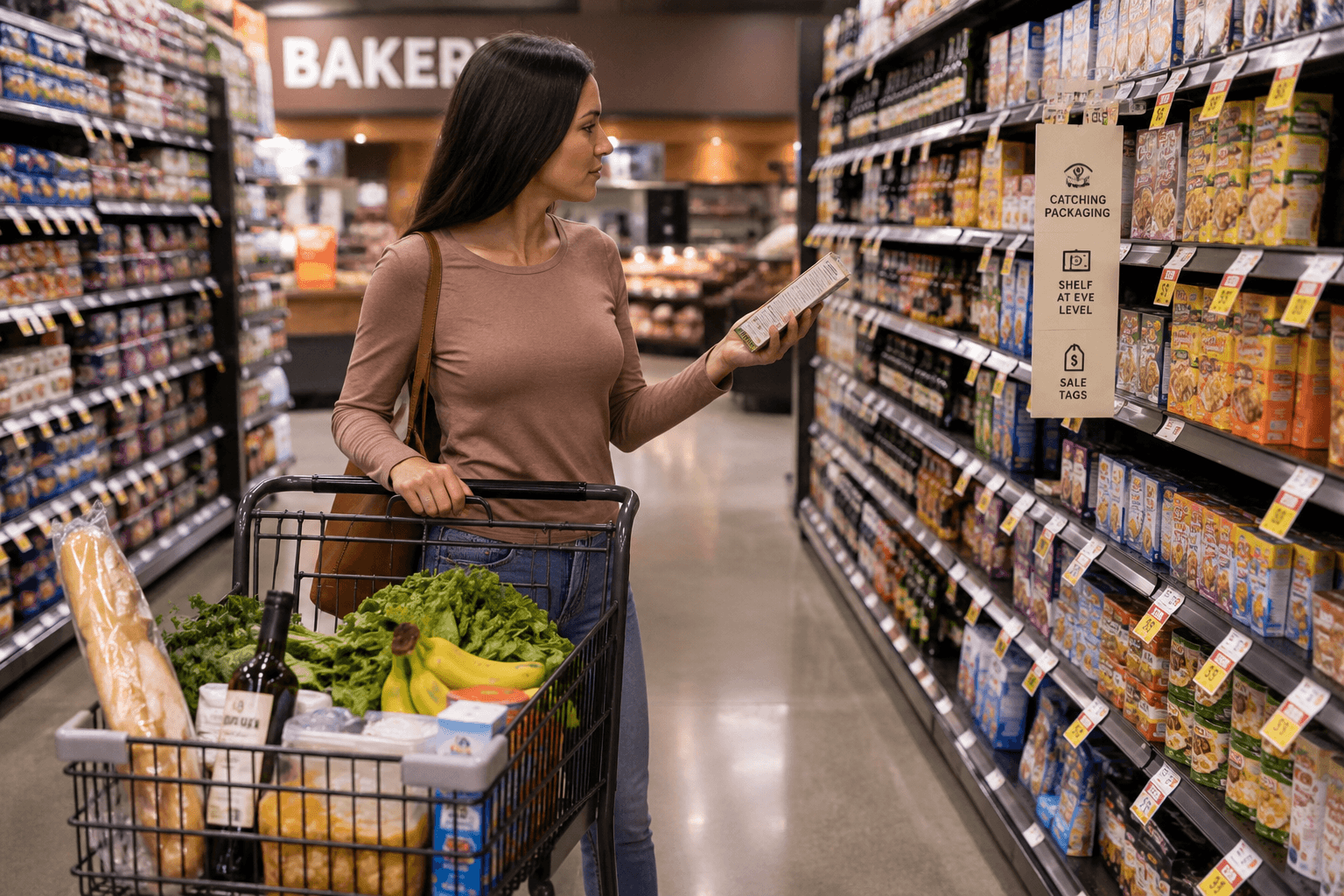
The products at eye level are not there because they’re the best value. They’re there because the manufacturer paid for that placement — or because the store’s margin on those products is highest. The best value products are typically on the top or bottom shelves. Store brands and generics are almost always placed lower. Looking up and down before grabbing what’s at eye level is worth the two seconds it takes.
3. The produce section is first for a reason
Most grocery stores place the produce department at the entrance. The colors, the freshness, the natural lighting — it creates a feeling of health and abundance that puts shoppers in a positive, generous mood. Behavioral research shows that shoppers who start with produce spend more overall because they feel virtuous about the healthy items in their cart and are more likely to “reward” themselves with impulse purchases later.
4. “10 for $10” makes you buy 10 when you only needed 2
Sale signs that read “10 for $10” or “5 for $5” create an anchoring effect — the number 10 or 5 becomes the target quantity in your mind. In most cases, the sale price applies whether you buy 1 or 10. You don’t need to buy the full quantity to get the per-unit price. But the sign’s formatting suggests otherwise, and shoppers routinely buy more units than they need because the number on the sign became their baseline.
5. Endcap displays are not always deals
Products displayed on endcaps — the shelves at the end of each aisle — look like featured sales. Some are. Many are not. Manufacturers pay premium fees for endcap placement, and the products displayed there are frequently at regular price or only marginally discounted. The visual prominence of the display creates the assumption of a deal without requiring one. Check the unit price on the shelf tag before assuming an endcap product is a bargain.
6. Checkout lane placement is the final upsell
Candy, magazines, gum, batteries, and small snack items placed in the checkout lane are the grocery store’s last attempt to add to your total. These items carry some of the highest margins in the store and are positioned where you’re standing still, bored, and close to done. The average American spends $5,400 per year on impulse purchases — and the checkout lane is where a disproportionate share of those purchases happen.
A grocery list — written before you leave home, based on what you actually need — is the single most effective defense against all six of these strategies. The stores are designed to make you deviate from it. The list is designed to keep you on it.