Lifestyle
6 Things Your Extended Warranty Company Hopes You Never Read in the Fine Print
By Erica Coleman · August 11, 2026
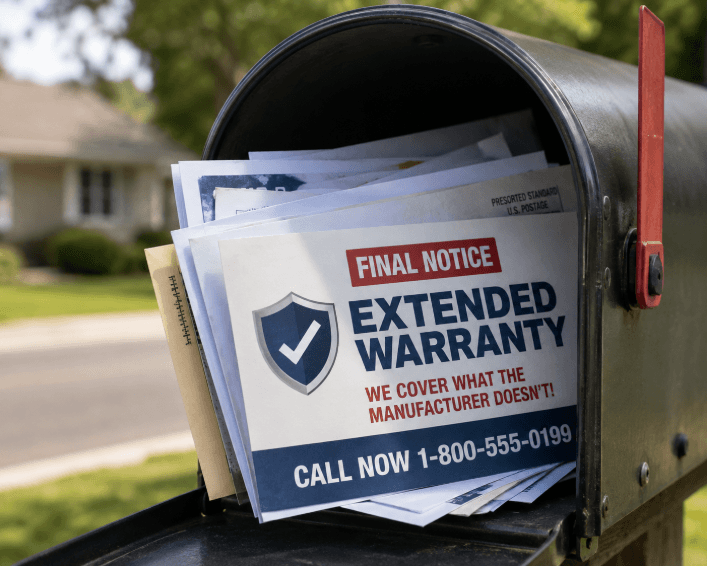
They call during dinner. They fill your mailbox. They send texts that look like they’re from your car dealer. And the product they’re selling is designed to deny the claim you eventually file.
Extended warranty companies — technically “vehicle service contract providers” — generate billions in annual revenue by selling coverage that sounds comprehensive and performs selectively. The fine print determines whether a repair is covered, and most customers don’t read it until the shop calls with a denied claim. Here’s what they’re counting on you not knowing.
“Bumper to bumper” doesn’t cover everything between the bumpers. The phrase implies total coverage. The contract says otherwise. Most extended warranties are “named-component” plans that list every covered part. If the part that failed isn’t on the list, the claim is denied — even if the part is essential to the vehicle’s operation. Gaskets, seals, sensors, and electronic modules are frequently excluded from plans marketed as comprehensive.
Pre-existing conditions void your coverage retroactively. If the warranty company determines that a mechanical issue existed before the contract start date — whether or not you knew about it — they can deny the claim and, in some cases, void the entire contract. An inspection at activation is rare, which means the company gets to decide after you file a claim whether the failure was pre-existing. The burden of proof falls on you.
You must follow the maintenance schedule — and prove it. Most contracts require that you’ve followed the manufacturer’s recommended maintenance schedule for the life of the vehicle. Skip an oil change or lose a receipt, and the warranty company can deny an engine claim on the basis that you failed to maintain the vehicle properly. Keeping every receipt and service record isn’t optional — it’s a condition of coverage.
The claims process is designed to create friction. Filing a claim typically requires calling the warranty company before any work begins, getting pre-authorization, using an approved repair facility, and waiting for an inspector to verify the failure. If the shop starts work before authorization, or if you use a facility outside the network, the claim can be denied entirely. The delay between breakdown and approval can take days — during which you’re without a car.
They pay wholesale for parts and labor — and the difference is your problem. When a claim is approved, many warranty companies reimburse at their own pre-set labor rate and parts pricing — which can be significantly below what your repair shop charges. The gap between what the warranty pays and what the shop bills is out of your pocket. A covered repair that costs $1,200 at the shop may generate a $700 reimbursement from the warranty, leaving you with a $500 bill for a “covered” repair.
The cancellation refund shrinks fast. Most contracts allow cancellation with a pro-rata refund, minus an administrative fee. But if you’ve filed any claims — even denied ones — the value of those claims may be deducted from your refund. A $2,500 warranty that paid one $800 repair may refund less than $500 after the deductions and fees are applied.
The extended warranty industry depends on the same math that drives all insurance: most people pay in more than they get back. The difference is that insurance is regulated. Extended warranties largely aren’t.