Lifestyle
After 40 Years of Work, Including 30 in the Navy, He Bought a 34-Foot RV for Retirement. Now He Owes $43,000 on It and the Best Offer Was $25,000
By Mike Harper · November 27, 2026
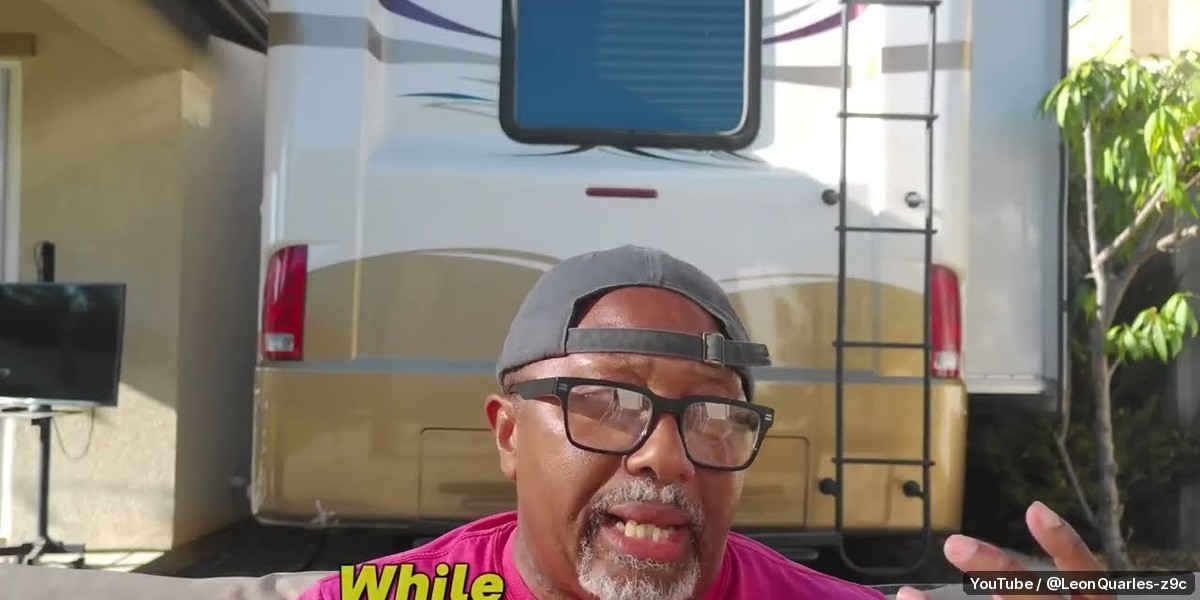
Leon Quarles opens his video with no warm-up. “I’m retired and I regret buying my Class A RV,” he says in the September upload on his YouTube channel, Leon Quarles (@LeonQuarles-z9c).
In another video, he describes his career as “40 years of working, 30 years in the Navy, and several more in civil service.” He pictured retirement as “no alarm clocks, no bosses, no Monday morning meetings,” and he wanted to hit the road.
“So naturally, I thought buying a Class A RV will give me more freedom. Well, guess what? I bought one,” he says. “And now I have something else. A 34 foot dependent.”
The money is the part that stings. “Now this one hurts,” he says. “I paid approximately $53,000 for my used RV in 2022. Today I still owe about $43,000 on it.”
When he looked into selling, the numbers did not work. “The best offer I could get was $25,000,” he says. That would leave him about $18,000 short of his loan, money he would have had to pay just to hand the RV over. “Now that’s not selling,” he says. “That’s paying someone else to make my problem disappear.”
As of the video, he still owns the RV, and the costs of running it keep coming. “My RV weighs 34,000 pounds, and replacing six tires alone can easily exceed $2,500,” he says. A flat is not something you fix with a jack from the trunk; he says you may need specialized roadside help or a heavy-duty tow truck. Fuel adds up too: “My RV has a 65 gallon fuel tank and average about 10.5 miles per gallon. Depending on the fuel prices, filling that tank can easily approach $350.”
His conclusion is that the thing meant to represent freedom became one more responsibility, between “the maintenance, depreciation, restrictions, and operating costs.”
And his verdict, if he could choose again: “I’m not sure I’ll buy another Class A RV, maybe something smaller. Or I’ll probably rent one when I wanna travel, then hand the keys back and walk away. Now that’s freedom.”
Leon’s numbers describe what lenders call negative equity. The Consumer Financial Protection Bureau defines it simply: owing more on a vehicle than it is worth. The bureau warns that when that happens, a dealer or lender may offer to roll the unpaid balance into a new loan, which “will make your new auto loan more expensive.”
It is not rare. In a 2024 report on auto loans made from 2018 to 2022, the CFPB found that 11.6% of all vehicle loans in its data, more than one in 10, included negative equity rolled over from a prior loan. The average amount was $5,073 for new vehicles and $3,284 for used ones. Leon’s gap on his RV, at about $18,000, is several times those averages.
If you own an RV, camper or vehicle you are thinking about selling, the CFPB suggests starting with two numbers: the exact payoff amount from your lender, which can differ from the balance on your statement, and what the vehicle is actually worth. Getting more than one offer helps. With those numbers in hand, you can decide whether to sell now, keep paying it down, or wait.
For anyone still shopping, Leon’s experience points to a simple step: add up the running costs, from tires to fuel, before signing, and price a few rentals for the trips you actually plan to take.
This article is for general information and is not financial or legal advice. Leon Quarles’s story and quotes are from videos on his YouTube channel; the prices, loan balance and offer are his own figures. Negative equity information is from the Consumer Financial Protection Bureau (consumerfinance.gov). This article was produced with the assistance of AI and fact-checked against the sources cited by LightWave Reports.