U.S. News
Eight Americans Died When a B-52 Bomber Crashed on Takeoff at Edwards Air Force Base
By Mike Harper · June 16, 2026
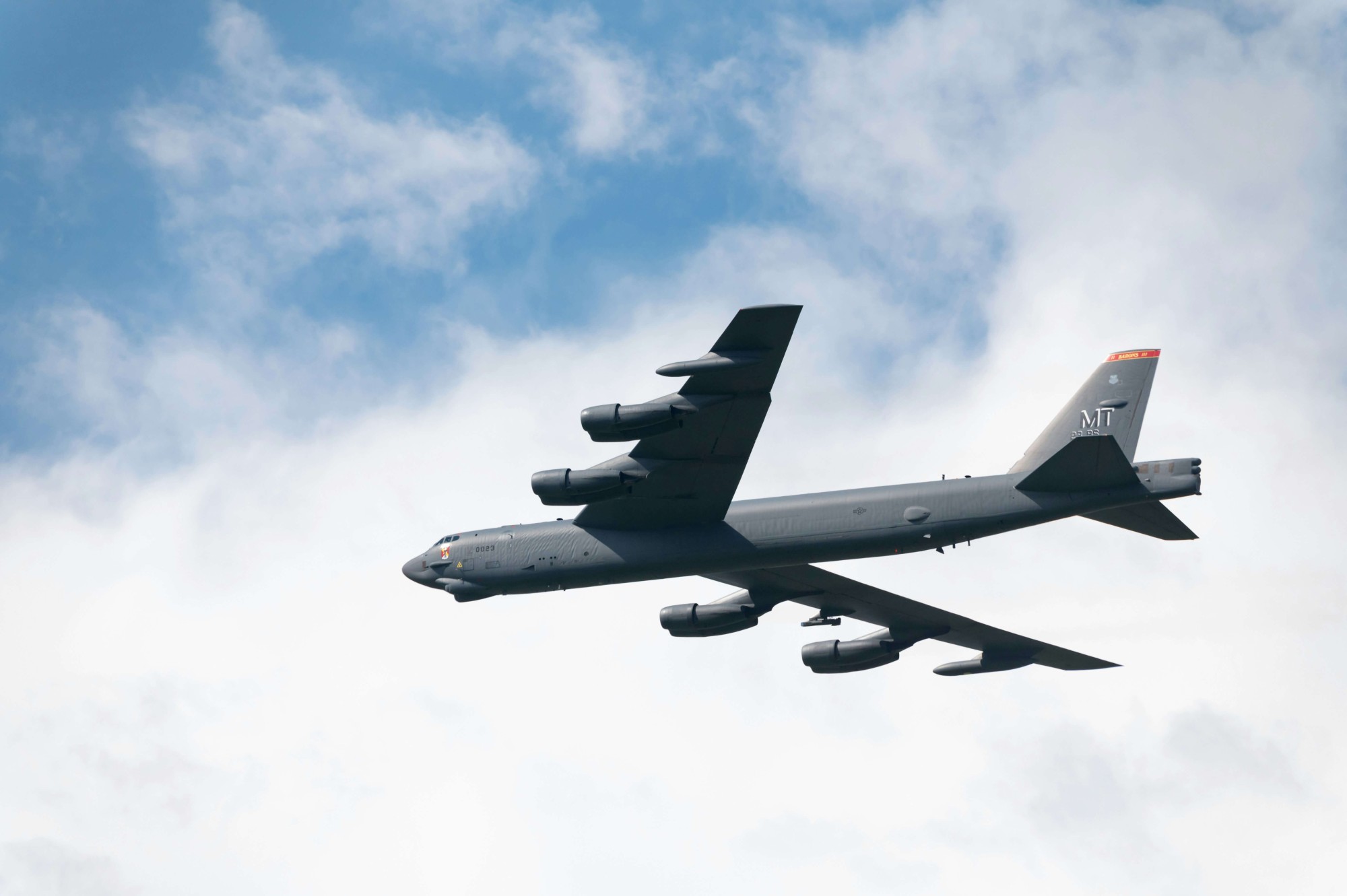
The B-52 Stratofortress took off from Edwards Air Force Base in the California Mojave Desert at 11:20 AM Pacific time Monday. It was on a routine test mission supporting a radar modernization program. It carried eight people — a mix of uniformed military, government civilians, and Boeing contractors. Seconds after takeoff, it went down.
All eight aboard were killed in what Air Force officials described as an unsurvivable crash. Colonel James Hayes, deputy commander of the 412th Test Wing at Edwards, confirmed the deaths at a press briefing Monday evening.
“Today, Edwards Air Force Base experienced a horrible tragedy, and we lost eight great Americans.”
The crash is the deadliest involving a B-52 since 1982, when nine crew members died at Mather Air Force Base near Sacramento. It is the first B-52 crash of any kind since 2016, when one went down at Andersen Air Force Base in Guam and all seven crew members survived.
The aircraft — tail number 60-0061, a B-52H model assigned to the 412th Test Wing — had recently arrived at Edwards from Port San Antonio after receiving an upgraded AN/APQ-188 radar system as part of the Air Force’s sweeping B-52 modernization program. The test flight Monday was intended to evaluate that new radar.
Boeing confirmed that two of its employees were among the eight killed. The names of the deceased have not been publicly released pending notification of families.
Aerial footage of the crash site showed a massive plume of black smoke rising from a large area of blackened ground on the desert runway. The base closed its airfield immediately and diverted all inbound aircraft. Edwards stood down all operations through Tuesday.
The B-52 has been in continuous service since 1955 — 71 years. It is the longest-serving combat aircraft in US military history. The Air Force operates 76 of them and plans to keep them flying into the 2050s through a modernization program that includes new Rolls-Royce engines, upgraded avionics, and the radar system that was being tested Monday. In January, the Air Force awarded Boeing a roughly $2 billion contract to modify and test two B-52s equipped with the new engines.
The cause of Monday’s crash remains under investigation. Hayes said the process would take approximately six months and that findings would not be available to the public until the investigation is complete.
Test missions take place multiple times a day at Edwards. The base has been the Air Force’s primary flight test center since Chuck Yeager broke the sound barrier there in 1947. Monday’s mission was supposed to be routine. It was the opposite.