Lifestyle
Fired at 64 Just Before Christmas, He Started His First Company at 66. His Report Five Years Later: Revenues Doubling Every Year and No Debt
By Erica Coleman · November 22, 2026
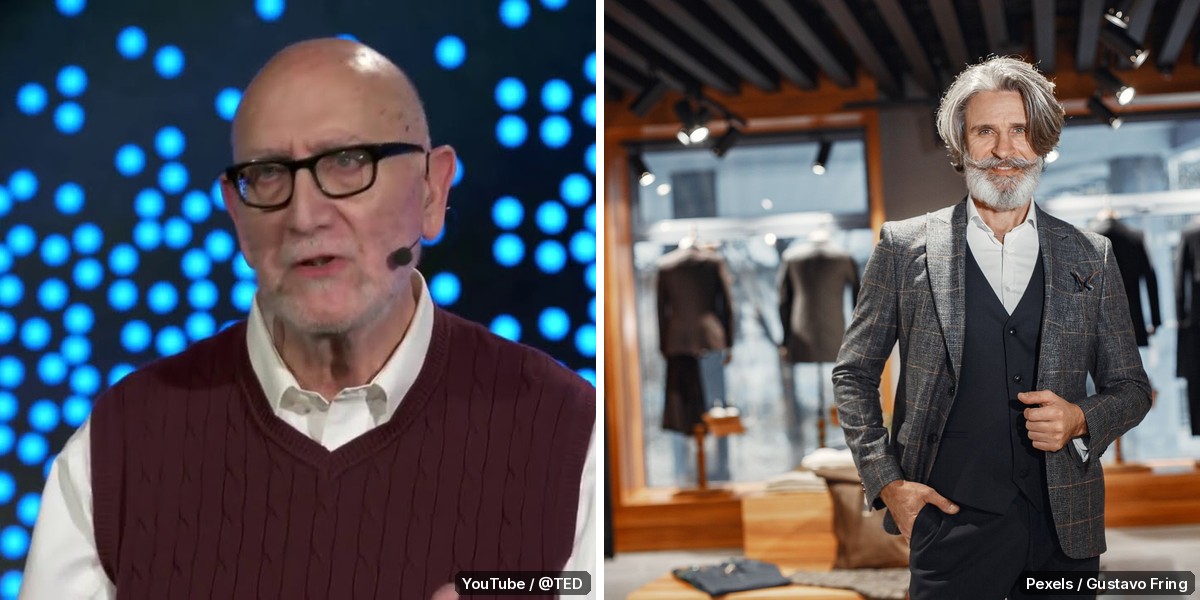
Losing a job in your 60s can feel like the end of a working life. For Paul Tasner, it turned out to be the start of a new one.
Tasner told his story in a TED talk recorded in June 2017 and later posted on TED’s YouTube channel. He opened with the day it happened.
“Friday afternoon, a few days before Christmas, 2009, I was the director of operations at a consumer products company in San Francisco,” he said. He was called into a meeting already in progress. “That meeting turned out to be my exit interview. I was fired.”
“I was 64 years old at the time,” he told the audience. He said it wasn’t completely unexpected. He signed a stack of papers, gathered his things and went to meet his wife at a nearby restaurant, where she had no idea what had happened. “Fast forward several hours, we both got really silly drunk.”
After more than 40 years of work as an engineer in manufacturing and packaging, he thought his network and reputation would carry him. But stopping wasn’t on the table. “Retirement was, like for so many people, simply not an option for me, so I turned to consulting,” he said, adding that he did it “without any passion whatsoever.”
Then an idea took hold. Out of concern for the environment, he wanted to build a business designing and making biodegradable packaging from paper, farm and even textile waste, to replace throwaway plastic packaging.
“And so now at the age of 66, with 40 years of experience, I became an entrepreneur for the very first time,” he said.
He is frank that it was hard. Manufacturing, outsourcing, patents, partnerships and funding were typical start-up problems, he said, “but hardly typical for me.” Raising money in San Francisco meant going up against young founders from the tech industry, which he called discouraging and intimidating. “I have shoes older than most of these people,” he joked.
Then he gave his report. “But five years later, I’m thrilled and proud to share with you that our revenues have doubled every year. We have no debt.” He said the company had several major clients, a patent that had been issued and more than 20 awards, and that he was doing “the most rewarding and meaningful work of my life right now.”
Those results are what Tasner reported in 2017. LightWave Reports has not reviewed the company’s finances and is not reporting on how it has done since the talk.
His larger point was about role models. He said that when he started, he looked for other first-time founders his age and found none, and he wants people to talk more about those who start businesses late in life.
For readers weighing something similar after a layoff, the U.S. Small Business Administration’s Plan your business guide is a free place to begin. It walks through market research, writing a business plan, calculating startup costs, building business credit and funding a new business, and it points to free business counseling. The SBA notes that loan eligibility for a new business is typically based on the owner’s personal credit.
Before putting savings into a venture in your 60s, it can help to work out how long you could cover living costs if the business earned nothing for a year or two, and how a new venture would fit with your plans for Social Security and Medicare. Tasner kept income coming in through consulting before he launched.
This article is for general information and is not financial or business advice. Paul Tasner’s story, figures and quotes are from his 2017 TED talk; LightWave Reports has not reviewed his company’s results. This article was produced with the assistance of AI and fact-checked against the sources cited by LightWave Reports.