Lifestyle
New to Medicare and Living Alone, She Runs Her Whole Life on $1,574 a Month. Her Line-by-Line Budget Leaves a $47 Cushion
By Mike Harper · November 22, 2026
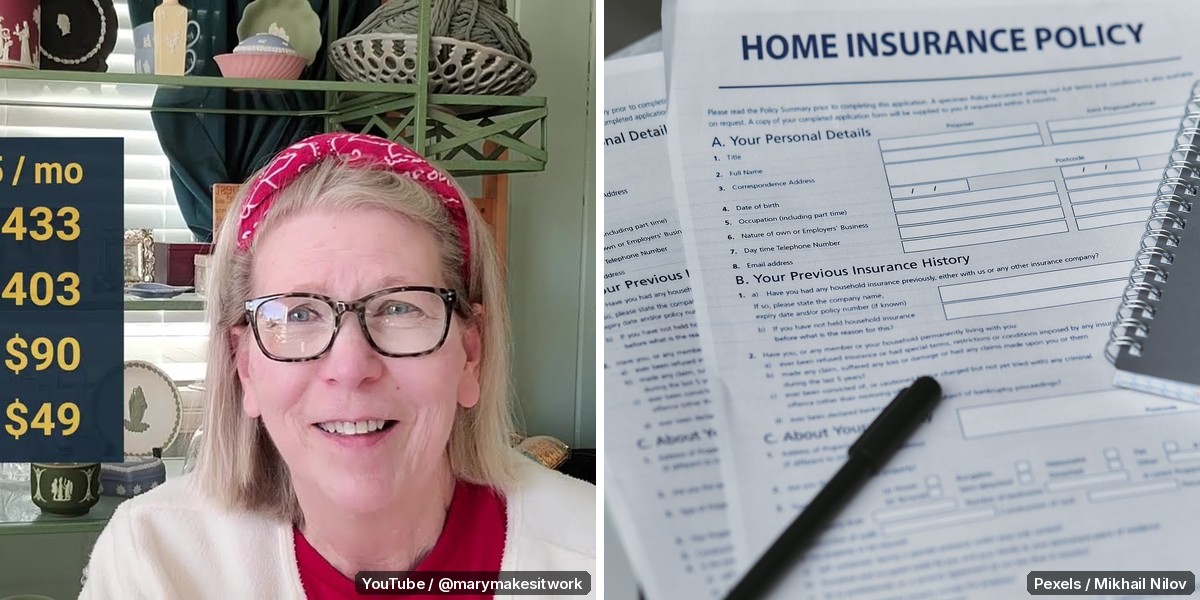
Plenty of retirees say they get by on a small income. Mary, who runs the YouTube channel Mary Makes It Work, decided to show her viewers every line of hers.
She lives alone with two rescue dogs and a rescue cat in a 700 square foot house built in the 1950s, and she recently started Medicare. In a video posted this month, she walks through the budget one slide at a time.
It starts with her income. “My social security check is $1,274 a month,” she says. She admits she might scrape by on that alone in what she calls “bare-bones survival mode,” mostly by cutting the grocery budget, but she isn’t willing to. “Here we’re refusing to be miserable,” she says.
So she tops up the check from savings. “I supplement my social security with a planned draw of $300 a month from my savings. That brings my total to $1,574 a month.”
Then comes the spending side. “My total monthly spending runs right between $1,525 and $1,527 a month, which leaves me about a $47 cushion,” she says. That leftover money, she adds, is “pure breathing room” once every bill is accounted for.
The biggest reason the numbers work is housing. She says she owns her home outright. It was a HUD house with a cash price of $40,000, and she put about $10,000 into it, so she pays no rent and no mortgage. Her car is old but paid off.
The house still costs money. Every month she moves $433 into a separate account for the big yearly bills, which she breaks down as $233 for property taxes, $100 for water and sewer and $100 for homeowners insurance. When those bills arrive, the money is already there. Gas and electric run $90 a month on a budget billing plan, and she says her heat never goes above 70 in winter and her air conditioning never goes below 75 in summer.
Health coverage is her second largest line. “Medicare at $403 a month,” she says. “That breaks down to $202.90 for Part B and $199.57 for my Part G supplement.” She is candid that she is still learning the system. “I’m new to this. I don’t really understand it,” she says, but she chose the supplement because, to her, “having a Plan G is peace of mind.”
Her Part B figure matches this year’s standard premium. The Centers for Medicare & Medicaid Services set the standard monthly Part B premium at $202.90 for 2026. That number changes in January: CMS has announced the 2027 standard premium will be $209.40, an increase of $6.50, and the Part B deductible will rise from $283 to $292, according to the agency’s 2027 fact sheet. For someone running a cushion as thin as hers, small changes like that matter.
A Medigap plan like hers is optional. Medicare.gov describes Medicare Supplement Insurance (Medigap) as extra insurance from a private company that helps pay your share of costs in Original Medicare, such as copayments, coinsurance and deductibles. Premiums vary by plan, company and where you live.
Mary is clear that her budget is built around her own life and may not fit anyone else’s. Anyone trying a budget like this can start by listing every fixed bill, adding up the yearly ones and dividing by 12 so they can be saved monthly, and checking what their own Part B premium will be in 2027. Your Social Security statement and your yearly Medicare notices show the numbers that apply to you.
This article is for general information and is not financial, insurance or medical advice. Mary’s story, figures and quotes are from her YouTube video; LightWave Reports has not reviewed her finances. This article was produced with the assistance of AI and fact-checked against the sources cited by LightWave Reports.