Sports
LIV Golf Is Ending. Bryson DeChambeau’s Plan Is YouTube.
By Curtis Jones · May 6, 2026
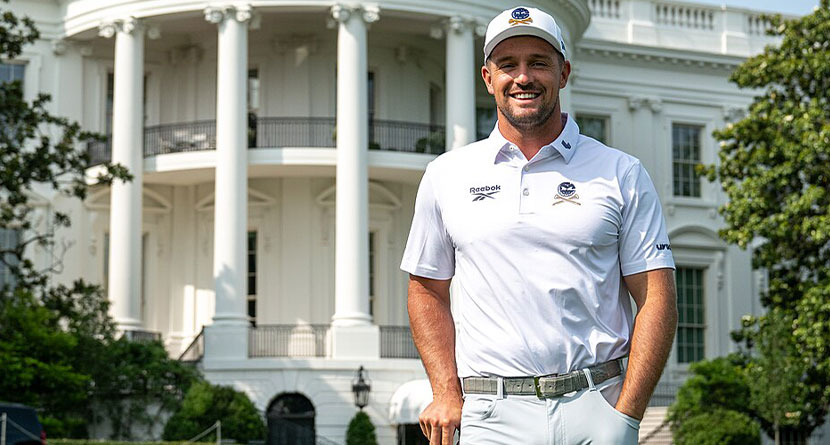
The Saudi Arabian Public Investment Fund has announced it will stop funding LIV Golf after this season. The league that disrupted professional golf, drew the biggest names in the sport with guaranteed contracts, and reshaped the economics of a sport that had been largely stable for decades is ending. And Bryson DeChambeau — LIV’s most visible American star and its most unlikely media personality — already has a plan.
“If LIV Golf does end, I’ll just focus on YouTube and play in tournaments that want me,” DeChambeau told reporters this week at the Centurion Club in London. “It sounds simple and it probably will be.”
His confidence is not unfounded. DeChambeau’s YouTube channel has accumulated more than 2 million subscribers — an extraordinary number for a professional athlete operating outside the mainstream sports media ecosystem. His content leans into the intersection of golf obsession and science nerd — slow-motion swing analysis, ball flight experiments, driving distance attempts, behind-the-scenes tournament access. It is not the polished, heavily produced content of a media company. It is the content of a person who genuinely finds golf interesting and wants other people to find it interesting too.
That authenticity is what has driven the growth. DeChambeau was already known as golf’s data-driven outlier before LIV — the player who approached the game as an engineering problem, who bulked up dramatically to gain distance, who carried a notebook of calculations to the course. YouTube gave that personality a format and an audience.
LIV Golf’s collapse, if it comes, will be consequential for the sport in ways that extend beyond DeChambeau’s content calendar. The league signed players including Phil Mickelson, Dustin Johnson, Brooks Koepka, Cameron Smith, and Jon Rahm to guaranteed deals worth hundreds of millions of dollars collectively. Those players are now facing the possibility that the circuit they chose over the PGA Tour — and which cost several of them their PGA Tour memberships — will no longer exist. Their path back to the major tour, if they want one, involves a negotiated reinstatement process that remains unresolved from the framework agreement announced in 2023 and never finalized.
DeChambeau’s position is different from most of his LIV colleagues. He is 31. He is ranked in the top 20 in the world. He has won two US Opens. The PGA Tour would almost certainly welcome him back — and he knows it. The YouTube fallback is not a desperation plan. It is an option that pays well, that he enjoys, and that he is good at.
Whether LIV officially ends this season or finds a buyer — the PGA Tour, a media company, or another sovereign wealth fund — the era of guaranteed-money professional golf as a viable alternative circuit is effectively over. The leverage it gave players negotiating with the PGA Tour was real while it lasted. What replaces it is a return to the pre-2022 order, with the exception that a handful of the world’s best players spent three years building YouTube channels, social media followings, and personal brands that may prove more durable than the league that paid them to do it.