Sports
Martina Navratilova Says Billie Jean King’s Trans Athlete Stance “Doesn’t Square” With Her Own Words
By Curtis Jones · June 3, 2026
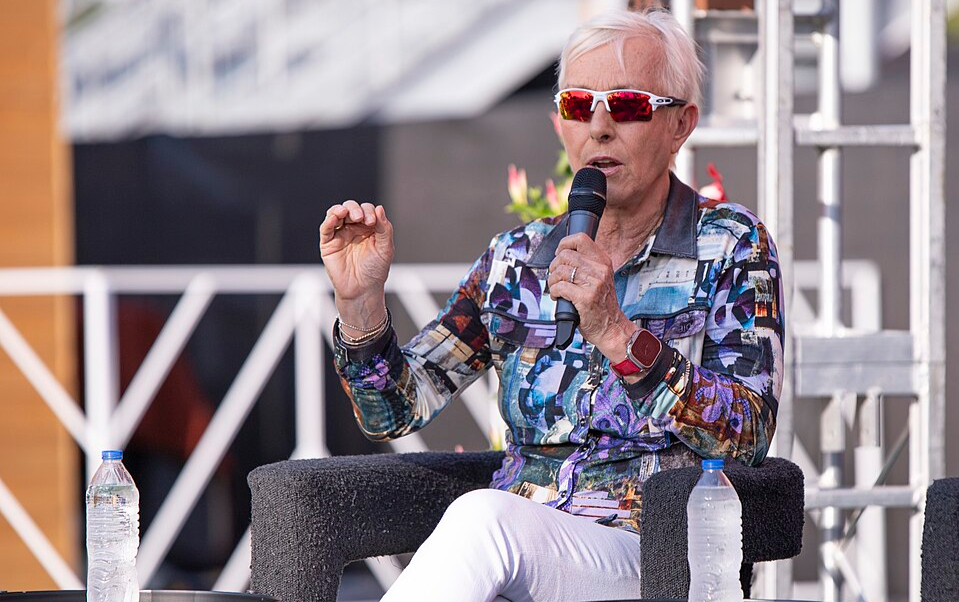
Martina Navratilova and Billie Jean King built the modern women’s tennis tour together. They fought for equal prize money together. They were both pioneers of gay rights in professional sports at a time when that required genuine courage. They have been photographed together at Wimbledon for fifty years.
They do not agree on this.
King has publicly supported transgender women competing in women’s tennis and sports more broadly. In a 2025 interview with The Telegraph ahead of Wimbledon, she described the broader trans athlete debate as “a nightmare” and said people should listen to transgender athletes’ stories and make them feel included.
“I honestly don’t know because it doesn’t square.”
What Navratilova was responding to is a clip of King discussing human biology — a clip in which King explicitly acknowledged that men are generally bigger and stronger than women, have different skeletal systems, have bigger hearts, and that women never claimed they were physically equivalent to men. That, King said, is the entire reason women’s sports categories exist.
Navratilova’s challenge to King is simple: if you acknowledge the physical differences that justify separate categories — and you do, because you said it on camera — how do you then argue that biological males should compete in the category created because of those differences?
“That’s the entire reason,” Navratilova said, completing the logic King’s own words established. “To have a protected category for women.”
Navratilova has been consistent on this position for years, and has paid a social price for it. She was dropped by several sponsors in 2019 after writing a column arguing that allowing transgender women to compete in women’s sports was “insane and unfair.” She has faced criticism from LGBTQ+ organizations she otherwise supports. She has continued saying the same thing.
King has not responded to Navratilova’s Tuesday comments. Her position — inclusion, listening to transgender athletes’ experiences, deference to the governing bodies of individual sports — is shared by a significant portion of the sports establishment, including major tennis organizations that have wrestled for years with how to set policy.
The conversation landed on a week that has made trans athlete policy unavoidable in sports. The Supreme Court is expected to rule any day in the case of B.P.J. v. West Virginia — the case centered on Becky Pepper-Jackson, who won the West Virginia state shot put championship last week while waiting for a ruling that may end her eligibility permanently. Serena Williams, who is returning to professional tennis at Queen’s Club next week, is a figure both Navratilova and King have mentioned in prior discussions about what the women’s game represents and who it is for.
Two women who built that game. One disagreement that the sport has not yet resolved.