Politics
The Trump Administration Asked the Supreme Court to Restrict Mail-In Voting Before the Midterms
By Mike Harper · July 27, 2026
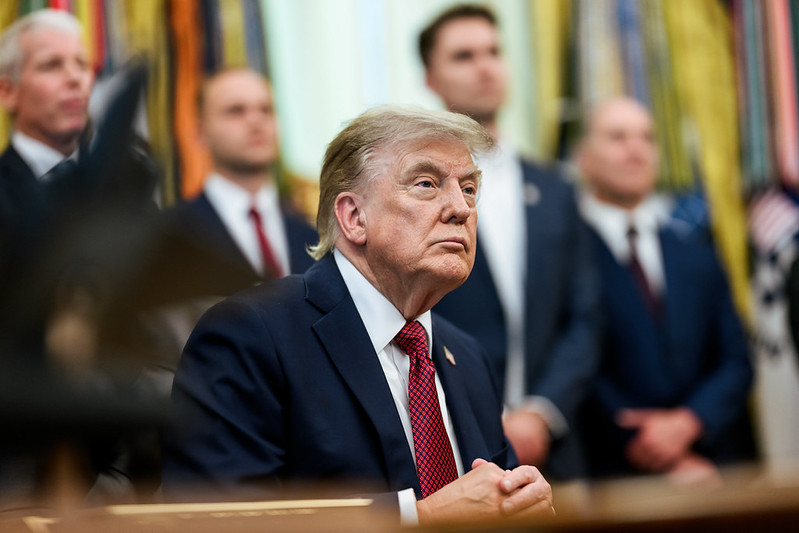
Ninety-nine days before the midterm elections, the Trump administration asked the Supreme Court to let the president control who gets a mail-in ballot.
The Justice Department filed an emergency request Monday asking the court to suspend a lower-court ruling that had blocked key parts of Trump’s March executive order in 23 states and Washington, D.C. The order directs federal agencies to create a “state citizenship list” of eligible voters and instructs the U.S. Postal Service to deliver mail ballots only to people on that list.
If the court grants the request, the restrictions could take effect nationwide while the underlying legal challenge continues — potentially reshaping how tens of millions of Americans vote in November.
A coalition of 23 mostly Democratic-governed states sued after Trump signed the order, arguing that the Constitution gives states and Congress — not the president — authority over election administration. A federal judge in Boston agreed in June and blocked enforcement for the plaintiff states. A three-judge panel on the 1st U.S. Circuit Court of Appeals upheld that ruling Saturday in a 2-1 decision.
The DOJ argued that the states’ challenge was premature because agencies hadn’t finalized the policies needed to implement the order.
Trump has promoted the changes as safeguards against illegal voting by noncitizens. Noncitizen voting has been shown to be rare and is already a federal felony that can result in deportation. Democrats and voting-rights organizations say the order could prevent eligible voters from receiving or returning mail ballots — particularly elderly voters, disabled Americans, and military personnel stationed overseas who rely heavily on absentee voting.
The emergency request lands at a court that has already signaled skepticism toward expansive mail-ballot rules. Earlier this year, the court’s conservative majority appeared poised to limit state laws allowing ballots received after Election Day to be counted — a separate but related challenge to how millions of Americans have voted for years.
The executive order is one piece of a broader effort by the Trump administration to overhaul election rules ahead of November. The president has also pushed Congress to pass legislation requiring national voter ID and proof of citizenship to register — measures that would require Congressional action, not just executive directives.
For the 23 states currently covered by the injunction, everything depends on what the Supreme Court does next. If the justices allow the order to move forward while litigation continues, states would face an immediate scramble to comply or resist with less than 100 days until voters start receiving ballots. If they leave the block in place, the election proceeds under existing state-run rules — at least for now.