Politics
Trump Asked Congress for $87.6 Billion the Day After the Senate Told Him to Stop the War
By Mike Harper · June 25, 2026
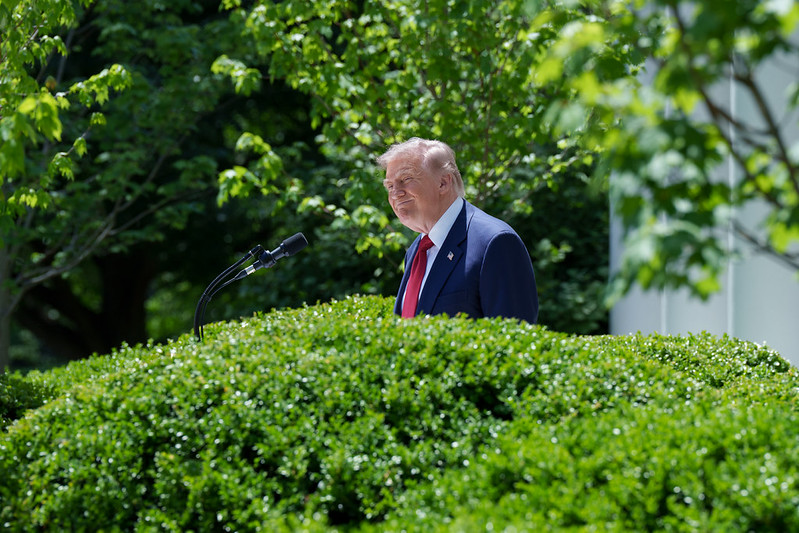
The Senate voted Tuesday night to block further military action against Iran. On Wednesday morning, the White House asked Congress for $87.6 billion — most of it for that war.
The Office of Management and Budget transmitted the supplemental spending request to House Speaker Mike Johnson on Wednesday, seeking $67 billion for the Defense Department to cover operational costs, munitions procurement, and classified programs related to Operation Epic Fury. The remaining $20.6 billion covers $11.1 billion in aid for American farmers, $1.4 billion for the Ebola outbreak in Central Africa, $1 billion for Penn Station reconstruction in New York, and $500 million for construction projects in Washington.
The request landed hours after Trump visited the Capitol for a private lunch with Republican senators — a meeting that devolved into a shouting match between the president and at least one senator over Tuesday night’s war powers vote. Trump called the four Republicans who crossed party lines “losers” on Truth Social the night before. In person, according to a senator granted anonymity, the exchange was louder.
The political math is the problem. Republicans hold slim majorities in both chambers, but appropriations bills typically require some Democratic votes to pass. Democrats have already said they won’t provide them.
“I will not rubber-stamp tens of billions more for this disastrous war of choice.”
That is Senator Patty Murray, the top Democrat on the Senate Appropriations Committee. Senator Chris Murphy of Connecticut was more blunt: the package “seems designed to repel Democratic votes” and is “designed not to pass.”
The $87.6 billion request comes on top of the $1 trillion already appropriated for defense last year and the $1.5 trillion the administration wants for next year — a nearly 50% increase in defense spending. The Pentagon originally sought $200 billion in supplemental funding for the war. This request is scaled down from that — but still represents the largest supplemental war funding request since the peak of the Iraq and Afghanistan wars.
The war lasted 107 days. It cost an estimated $100 billion. Only 24% of Americans say it was worth it. The ceasefire is holding. The MOU is signed. Nuclear talks are underway in Switzerland. And the administration is asking Congress to write a check for a war that both chambers have now voted to stop.