Politics
Trump Courts Democrats on Cost-of-Living Push
By Jake Beardslee · January 23, 2026
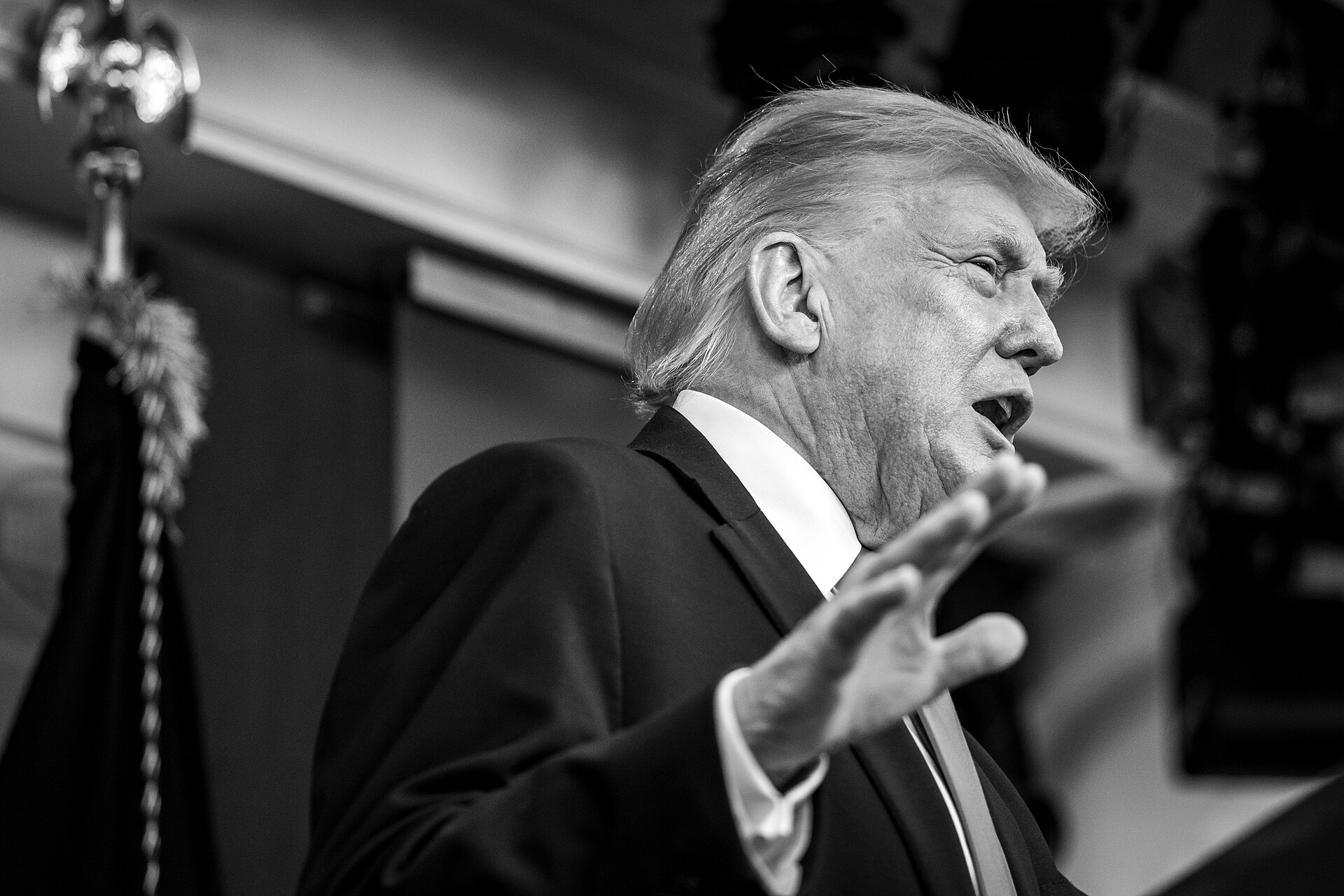
President Donald Trump has opened the midterm year with an unusual strategy: direct outreach to some of the most prominent liberal Democrats in Washington, as his administration explores populist economic policies aimed at easing high living costs.
In recent weeks, Trump has personally contacted Sen. Elizabeth Warren of Massachusetts following a speech she delivered on the future of the Democratic Party. He invited Senate Minority Leader Chuck Schumer to the White House to discuss a major New York infrastructure project. And he brought Sen. Peter Welch of Vermont to an Oval Office event highlighting legislation significant to his home state.
For a president determined to keep his party in control of Congress, the overtures mark a striking and unexpected effort to engage across the aisle, particularly with lawmakers known for progressive economic positions.
The push comes as both parties compete to claim leadership on affordability issues. According to a senior White House official granted anonymity to speak candidly, Trump’s team is increasingly focused on populist-leaning economic interventions rather than traditional Republican orthodoxy, Politico reported.
Some proposals on affordability are “more populist-inflected than some of the more classic proposals that had been worked on,” the official said. “A lot of these proposals have, in part, been put forward by Democrats.”
The White House is now examining policies targeting credit card interest rates, housing costs, and prescription drug prices — areas where conventional Republican policy approaches may diverge from voter sentiment.
“These are pretty marquee issues where the perspective of more standard old-school Republican orthodoxy is not necessarily in step with where Republican voters are,” the official said. “Some of these are issues where the Washington GOP consensus and the GOP base consensus are divergent.”
While Trump’s outreach signals a tactical shift, actual legislative cooperation would require repairing relationships that have been deeply strained. During his first term and again last year, partisan tensions escalated sharply, including a government funding standoff that saw Trump post a deepfake image of House Minority Leader Hakeem Jeffries. Until now, neither party showed interest in reconciliation.
Trump’s call to Warren came shortly after she criticized him in a speech on affordability. She later told CNBC she was “surprised” and “did not recognize the phone number.” Warren said Trump discussed a possible cap on credit card interest rates — a policy she has long championed — and told him: “Congress can pass legislation to cap credit card rates if he will actually fight for it.”
Days earlier, Trump publicly floated a one-year cap of 10 percent on credit card interest rates.
The president has also endorsed bipartisan legislation introduced by Sen. Dick Durbin and Sen. Roger Marshall to curb credit card swipe fees. In addition, he has expressed interest in restricting large investors from purchasing single-family homes, a proposal backed by several Senate Democrats.
Schumer’s White House meeting focused on the Gateway Project, a long-planned infrastructure overhaul connecting New York and New Jersey — a project that has been a point of friction between the two since Trump’s first term. During the meeting, Schumer also raised unrelated concerns about health care and the administration’s use of ICE to conduct mass deportations.
Welch attended a White House signing ceremony for legislation restoring whole milk in school cafeterias, reversing an Obama-era nutrition initiative. According to his office, Welch used the meeting to “advocate for the extension of the [Affordable Care Act] health care tax credits,” and discussed the matter with Trump and Health and Human Services Secretary Robert F. Kennedy Jr.
Warren, meanwhile, used her call to press Trump to push House Republicans on housing affordability legislation.
However, collaboration with Trump carries political risks for Democrats. Michigan Gov. Gretchen Whitmer, who has developed a cordial relationship with the president, has faced criticism from fellow Democrats for being perceived as too accommodating.
Trump’s bipartisan outreach and economic repositioning come amid troubling public opinion data. Recent CNN polling found 61 percent of voters disapprove of his handling of the economy, while a New York Times/Siena College poll showed only 34 percent approve of his handling of the cost of living.
The White House says Democratic engagement is part of a broader attempt to merge competing economic frameworks.
The administration aims to blend “what might be termed traditional Republican approaches and traditional Democratic approaches” to solve domestic challenges, according to the senior official.
“While these proposals are more populist in orientation, it doesn’t mean just taking off the shelf a Democratic proposal and refashioning it. It is trying to figure out the ways in which the free market and Trump-ist populism can be advanced using different paradigms,” the official said.