World
Why Do Credible Sources Report Vastly Different Death Tolls From Iran’s Recent Protests?
By CM Chaney · January 20, 2026
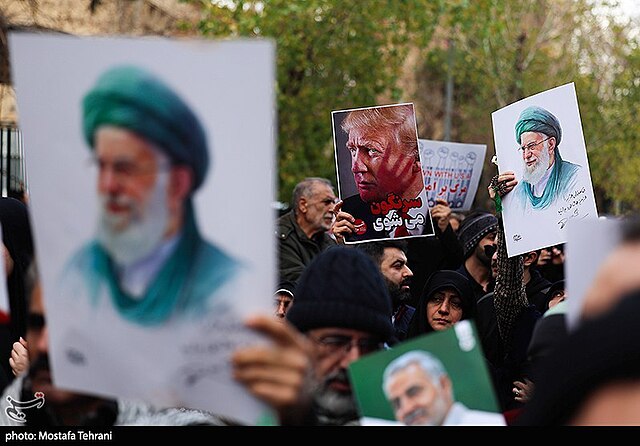
When protests erupt in Iran, casualty figures often diverge sharply across sources. International human rights groups publish conservative minimum counts. Iranian authorities release far lower official numbers. Activist networks and diaspora groups circulate estimates that can be several times higher. The gap is not a simple matter of accuracy versus error. It reflects different methods, incentives, and access constraints—especially in a closed political environment.
What different sources are actually counting
International organizations such as Amnesty International and Human Rights Watch typically report verified minimums. Their figures include only deaths they can confirm through multiple, independent lines of evidence—often naming victims and locations. By design, these totals undercount. Researchers exclude cases where evidence is incomplete, even if those cases are plausible. Amnesty and Human Rights Watch explicitly describe their numbers as floors, not final tallies, in order to preserve credibility and withstand scrutiny.
By contrast, figures released by Iranian state institutions reflect official counts. These may include only deaths acknowledged by authorities or those attributed to causes deemed legitimate by the state. Officials have incentives to minimize totals: lower numbers reduce domestic and international pressure and frame security responses as restrained. In some cases, authorities also apply narrow definitions—counting only civilians killed directly by security forces, for example, while excluding deaths attributed to “rioters,” accidents, or later complications.
Activist and opposition-linked groups often publish estimates. These may aggregate reports from social media, local networks, and eyewitnesses, sometimes extrapolating from partial data. Such figures aim to capture the likely scale of violence, including deaths that never reach official records. Because they prioritize speed and completeness over verification thresholds, these estimates can overshoot—or, at times, accurately anticipate later-confirmed totals.
How deaths are verified in closed or repressive states
Independent verification in Iran is difficult. Foreign journalists face access restrictions; domestic reporters operate under legal and security constraints. Human rights investigators therefore rely on indirect methods:
Video and photo analysis: Researchers authenticate footage by matching landmarks, weather, timestamps, and crowd behavior, and by cross-referencing multiple uploads from different accounts.
Hospital and morgue records: Where possible, investigators corroborate deaths through medical documentation, burial records, or testimony from healthcare workers—often anonymized for safety.
Eyewitness testimony: Accounts from family members, neighbors, and fellow protesters are collected and cross-checked to identify consistencies and discrepancies.
Digital forensics: Metadata, satellite imagery, and open-source intelligence help establish when and where lethal force was used.
Each method carries limits. Videos can be misdated or recycled; medical records may be inaccessible; witnesses may fear retaliation. As a result, organizations apply stringent standards before adding a case to a confirmed list.
Why uncertainty persists—and may never fully resolve
Even years later, a definitive death toll may remain elusive. Some families avoid reporting deaths to prevent harassment. Others are pressured to sign statements attributing deaths to non-political causes. Records can be altered or sealed. In such environments, the evidentiary trail degrades over time, not improves. This is why credible groups stress transparency about methodology and uncertainty rather than precision.
Competing interpretations, without endorsement
Two broad interpretations explain the spread in numbers. One emphasizes state minimization: governments undercount to control narratives and limit accountability. The other points to activist inflation: decentralized networks may double-count cases, include unverified reports, or extrapolate aggressively. Both dynamics can operate simultaneously. Recognizing this does not require choosing a side; it requires understanding how different incentives shape counting.
How readers should interpret casualty numbers going forward
When you encounter casualty figures in future conflicts, note three things: who is reporting, how they define and verify deaths, and what they say about uncertainty. Treat official counts in repressive states as partial by default. Read activist estimates as signals of scale, not precise totals. Give special weight to verified minimums from independent organizations—and remember that a minimum is not the whole story.