Lifestyle
5 Signs of Skin Cancer Dermatologists Say Most People Overlook
By Erica Coleman · August 11, 2026
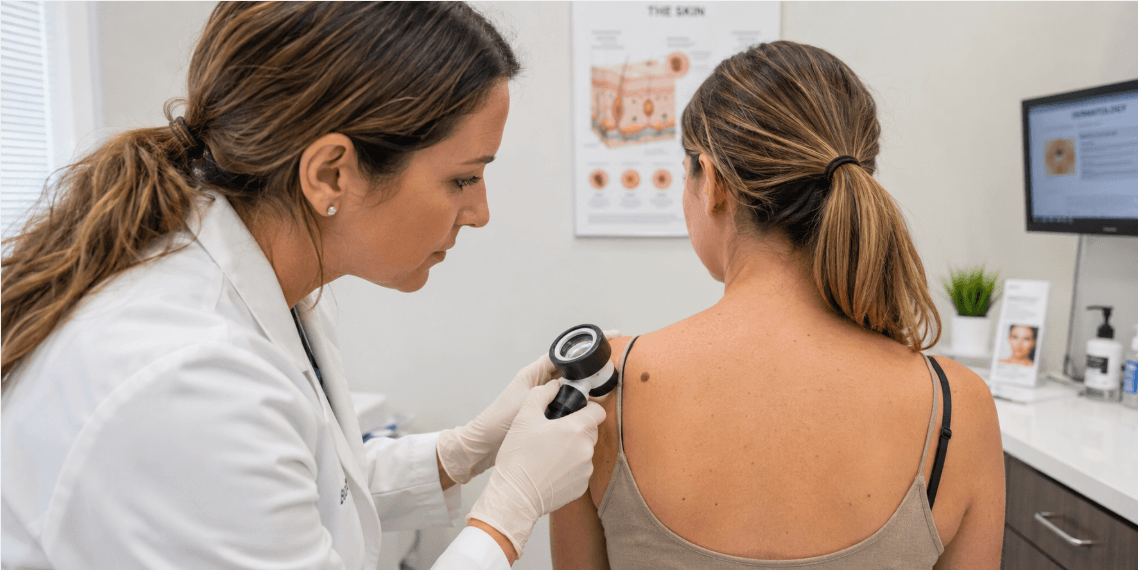
It doesn’t always look like a mole. That’s the problem.
More than 112,000 Americans will be diagnosed with invasive melanoma this year, and skin cancer overall is the most common cancer in the United States. The survival rate when caught early is over 99%. When caught late, it drops dramatically. The gap between those two outcomes is almost entirely about recognition — and most people are looking for the wrong thing.
A sore that won’t heal. A small wound, scab, or patch of irritated skin that doesn’t heal after several weeks is one of the most commonly overlooked signs of basal cell or squamous cell carcinoma. It may bleed, crust over, appear to heal, then open again. Most people dismiss it as dry skin or a minor scrape that keeps getting irritated. A sore that cycles through healing and reopening for more than three weeks warrants a dermatology visit.
A shiny or pearly bump that wasn’t there before. Basal cell carcinoma — the most common type of skin cancer — often presents not as a dark mole but as a flesh-colored, translucent, or pearly bump. It may have visible blood vessels running through it. On darker skin, it can appear as a dark, raised lesion. Because it doesn’t look like what most people imagine skin cancer looks like, it gets ignored.
A dark streak under a fingernail or toenail. Melanoma can develop under the nails, where it appears as a dark vertical line or streak. It’s called subungual melanoma, and it’s frequently mistaken for a bruise from an injury. Unlike a bruise, it doesn’t grow out with the nail. Acral lentiginous melanoma — which also appears on palms and soles — accounts for a significant percentage of melanoma cases in people with darker skin tones, who are often diagnosed at later stages because the warning signs get overlooked.
A mole that looks different from all your others. The “ugly duckling” rule is one of the most practical screening tools dermatologists recommend. Most moles on your body should look roughly similar to each other. Any mole that stands out — darker, larger, different shape, different texture — deserves closer examination, even if it doesn’t check every box on the classic ABCDE criteria. The mole that doesn’t match its neighbors is the one to show your doctor.
A rough, scaly patch that feels like sandpaper. Actinic keratoses — rough, dry, scaly patches that appear on sun-exposed skin — are precancerous lesions that can progress to squamous cell carcinoma if left untreated. They’re most common on the face, ears, scalp, forearms, and backs of the hands. Many people assume they’re just dry skin or age spots. A patch that feels gritty or rough to the touch and doesn’t respond to moisturizer is worth having evaluated.
The areas people forget to check are the ones where skin cancer hides longest: the scalp, behind the ears, between toes, under nails, and the soles of the feet. A monthly self-exam with a mirror takes five minutes. An annual skin check with a dermatologist takes 15. The cancers that kill are almost always the ones that weren’t caught early enough — and almost all of them were visible before they became dangerous.