Lifestyle
At 69, a Retired Navy Seabee Lives Debt-Free in the Philippines in a House Paid for in Cash. His Verdict: “I Can Do More Here With My Money”
By Curtis Jones · November 19, 2026
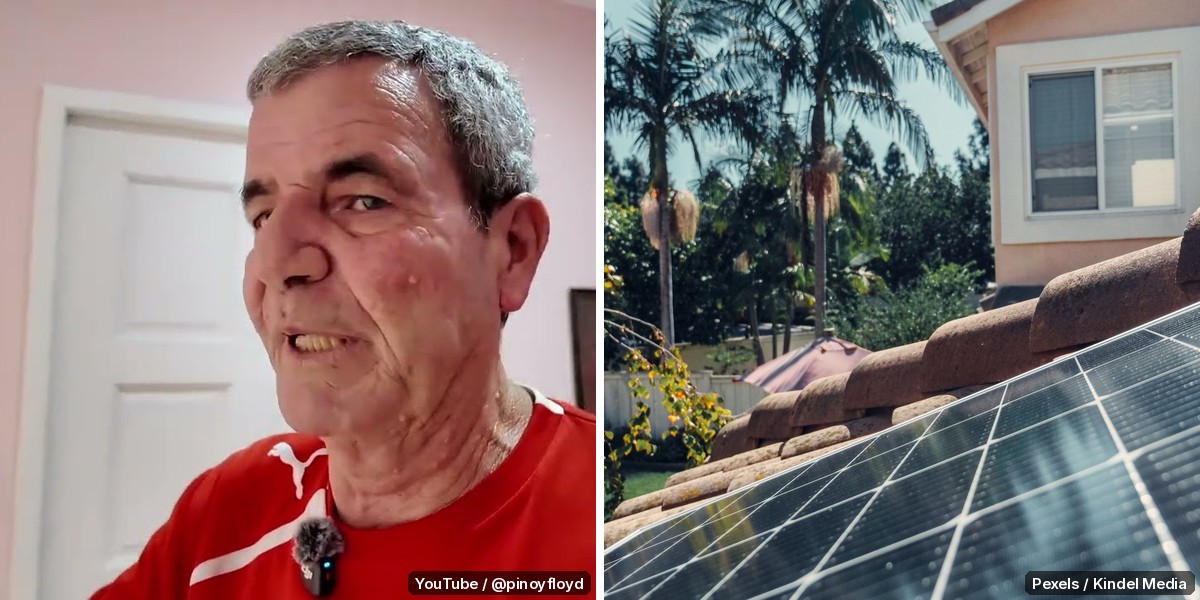
Tom served 21 years in the Navy, retiring from the Seabees, then kept working for years. Now he lives in Lapu-Lapu City, in the Cebu area of the Philippines, with no mortgage at all.
“I retired from the US Navy Seabees back in December 2000. Fully retired now, since June of last year,” he says in a video interview on the YouTube channel @pinoyfloyd, posted in May. After the Navy, he worked for a government contractor upgrading security at U.S. embassies. “I just had a birthday last month, which now I’m 69,” he adds. “We bought this back in 2019.”
He and his wife, who is Filipino, bought the house while he was still working. He puts the price at 4.3 million pesos, “roughly about $87,000,” paid in cash. “I don’t want to have any debt when I’m retired. And that’s what I worked on,” he says. “There’s no debt. I don’t owe anything.”
“Well, I pay cash for everything,” he says. “I’m debt free. I don’t have anything owed back in the States.” He sold his U.S. house, too.
Asked why foreigners are warned away from Philippine real estate, he answers: “She owns it. Not me.” The U.S. State Department’s 2025 Investment Climate Statement says foreigners “are constitutionally prohibited from fully owning land” in the Philippines.
His income starts with two pensions. “I have two pensions. I got my Social Security, which I’m maxed, all right, because I worked all my life, plus my Navy pension comes in every month, plus I have assets, other assets,” he says.
Before new air conditioners and solar panels, he says, “our electric bill was averaging, what, 8,000 pesos a month, sometimes even more.” After going solar: “You know what my bill was for March? 294 pesos.” Groceries, which he tracks, run “anywhere from 20 to 25K” pesos a month.
He warns against expecting too much. “Don’t come over here expecting to live on $100 a week. If you want to come over here and live real comfortable, you can do very easily on $1,000, $1,500 a month.”
Then comes the catch, which he raises himself. Medicare doesn’t cover care in the Philippines. “You have to have Part B in order to maintain your Tricare. And I’m like, wait a minute. So what did I serve 21 years in the military for?” he says. He canceled Part B, he says, which he put at “180 something a month,” because he wouldn’t use it there.
Anyone thinking of doing the same should know TRICARE’s rules. Its TRICARE For Life page says coverage is available worldwide, but adds: “If you live overseas, you must have Medicare Part B to remain eligible for TRICARE even though Medicare doesn’t provide coverage overseas.” Part B costs $202.90 a month in 2026 and will be $209.40 in 2027, according to Medicare.gov. Signing up again later can mean a late enrollment penalty of 10% for each full 12-month period you could have had Part B but didn’t, usually for as long as you have it.
Tom also says he can use the VA in Manila if he gets seriously sick. The VA says its Manila clinic, the only VA facility in a foreign country, and its Foreign Medical Program cover care only for a VA-rated, service-connected disability or a condition that makes one worse.
His verdict hasn’t changed. In an October follow-up video, he asked himself whether he could live as comfortably in the U.S. “No,” he said. “I can do more here with my money.”
This article is for general information and is not financial, legal or health insurance advice. Tom’s story and quotes are from videos on the @pinoyfloyd YouTube channel. Check your own TRICARE, Medicare and VA eligibility with those agencies before making changes. This article was produced with the assistance of AI and fact-checked against the sources cited by LightWave Reports.