Lifestyle
5 Signs Your Dryer Is a Fire Hazard Most Homeowners Ignore
By Erica Coleman · August 8, 2026
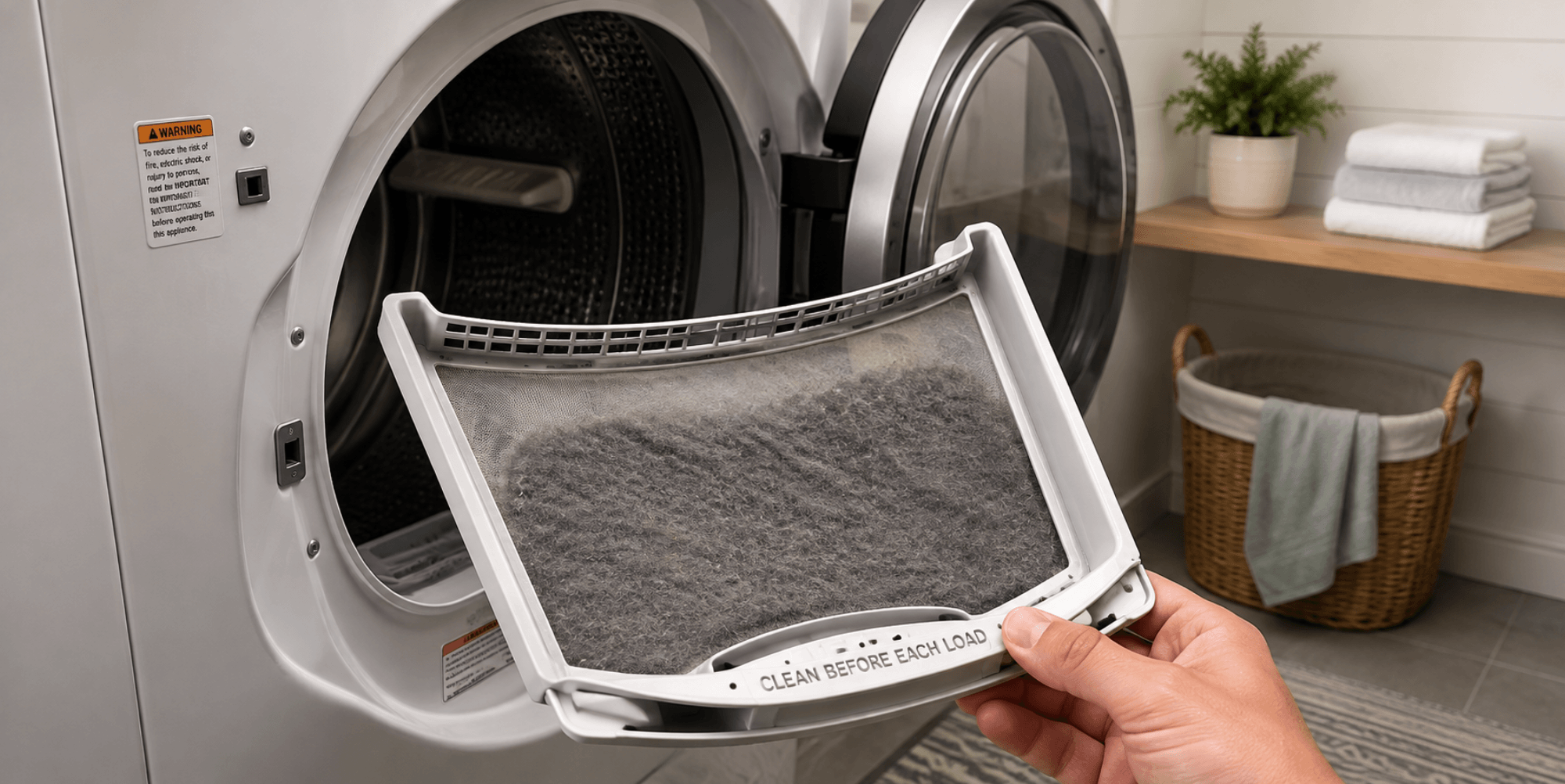
Clothes dryers cause approximately 2,900 home fires every year in the United States. The leading cause isn’t a broken machine. It’s lint you can’t see.
Most dryer fires don’t start during a cycle — they start in the minutes after, when residual heat is still high and there’s no longer airflow to keep accumulated lint cool. The warning signs appear weeks or months before anything catches fire. Here’s what to watch for.
Clothes take two cycles to dry. If loads that used to finish in 45 minutes now take 90, airflow is restricted. The most common cause is lint buildup deep in the vent line — not the lint trap, which catches the big fibers, but the ductwork behind the machine and through the wall. Reduced airflow means heat builds up in the cabinet, lint accumulates faster, and the system runs hotter for longer. This is the number-one early warning sign, and most homeowners ignore it for months.
You smell something burning during or after a cycle. Any scorched or hot-electrical smell is a stop-using-it-now signal. It means lint is charring near the heating element or deep in the vent. Stop the cycle immediately, disconnect the vent, and inspect the lint trap, the vent line, and the cabinet interior before running the machine again.
The outside of the dryer feels unusually hot. The dryer cabinet should feel warm during operation, not hot. If the top or sides are too hot to touch, heat isn’t escaping through the vent as designed — it’s building up inside the machine. That excess heat is being absorbed by lint, which ignites at roughly 480°F.
The vent hood outside isn’t opening when the dryer runs. Walk outside while the dryer is running and check the exterior vent flap. If it’s not opening or you can’t feel warm air flowing out, the vent is blocked somewhere between the machine and the wall. No airflow out means all the heat stays in.
You see lint accumulating behind or around the machine. Visible lint on the floor behind the dryer, around the vent connection, or on clothing after a cycle indicates the system is leaking lint before it reaches the vent. This often means the vent hose is disconnected, kinked, or damaged — any of which creates a direct fire hazard.
The U.S. Fire Administration recommends professional vent cleaning at least once a year. If your vent runs more than 25 feet or includes multiple elbows, clean it twice a year. Replace flexible plastic or foil vent hoses with rigid metal ducting — the plastic varieties trap lint, sag, and cannot handle the heat. Cleaning the lint trap after every load is necessary but not sufficient. The vent behind the machine is where fires start.