Lifestyle
5 Signs Your Gutters Need Attention Before They Damage Your Home
By Erica Coleman · July 7, 2026
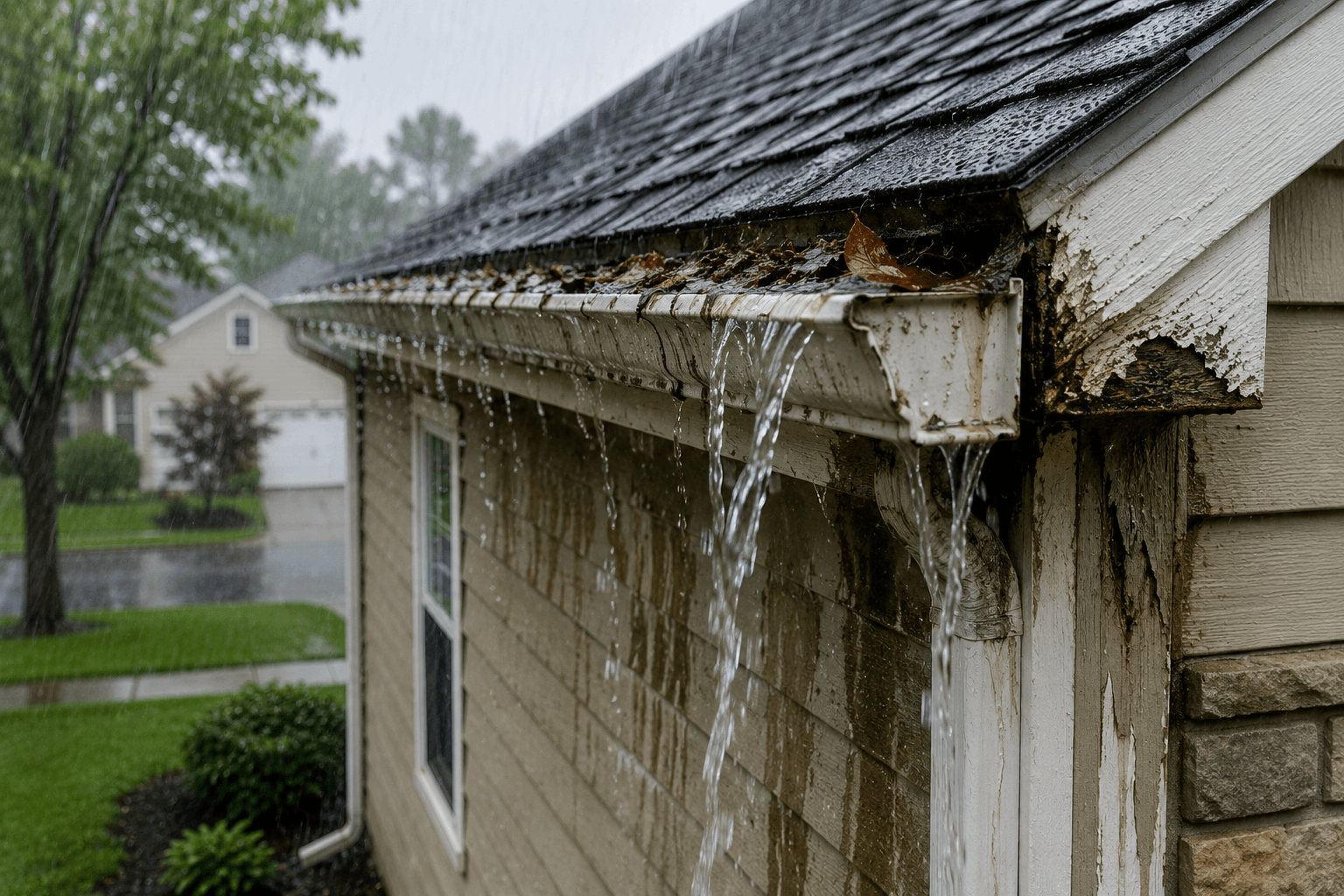
Gutters exist for one reason: to move water away from your foundation. When they fail, the water goes where it shouldn’t — into your foundation walls, your basement, your fascia boards, and the soil beneath your home. Here are five signs your gutters are failing before the damage becomes visible inside the house.
1. Water pouring over the sides during rain
Gutters that overflow during moderate rain are either clogged, sagging, or undersized. The most common cause is debris buildup — leaves, pine needles, and shingle granules that accumulate and block the flow to the downspout. Cleaning gutters twice a year — once in late spring and once in late fall — prevents the overflow that sends water directly down the exterior wall and into the foundation.
2. Visible sagging or pulling away from the fascia
Gutters are attached to the fascia board with hangers or spikes. Over time, the weight of debris and standing water pulls the gutter away from the house, creating a gap where water runs behind the gutter rather than through it. Water running behind the gutter causes fascia rot — wood damage that compromises the structural connection between the roof edge and the wall. If your gutter is visibly separating from the house, the fix is re-securing it before the fascia behind it deteriorates.
3. Puddles forming near the foundation after rain
If water is pooling within the first two feet of your foundation after a rainstorm, your gutters and downspouts are not moving water far enough away from the house. Downspout extensions — $5 to $15 plastic attachments that direct water 4 to 6 feet away from the foundation — solve this immediately. Without them, every rainstorm sends water directly into the soil adjacent to your foundation, where it creates hydrostatic pressure that can crack foundation walls over time.
4. Staining or mildew on the exterior walls beneath the gutters
Dark streaks, green mildew, or visible water staining on the siding below your gutters indicates water is consistently running down the wall — either from an overflow or from a gap between the gutter and the fascia. The staining is cosmetic. What’s happening behind the siding — moisture intrusion that promotes rot and mold — is not.
5. Rust spots, cracks, or visible holes
Metal gutters develop rust. Vinyl gutters crack in temperature extremes. Both develop holes at joints and seams over time. A single pinhole leak dripping during every rainstorm sends thousands of gallons of water into a concentrated spot next to your foundation over the course of a year. Small holes can be patched with gutter sealant. Large ones or widespread rust mean the gutter section needs replacement — a $5 to $10 per linear foot job that prevents damage worth hundreds of times more.
Gutters are the least glamorous part of your home. They are also the part most directly responsible for protecting the most expensive part — your foundation. Two cleanings a year and a visual inspection from the ground takes less than an hour and prevents the kind of damage that homeowners don’t discover until it’s already behind the walls.