Lifestyle
5 Things to Check Before a Summer Road Trip That Most Drivers Skip
By Erica Coleman · July 6, 2026
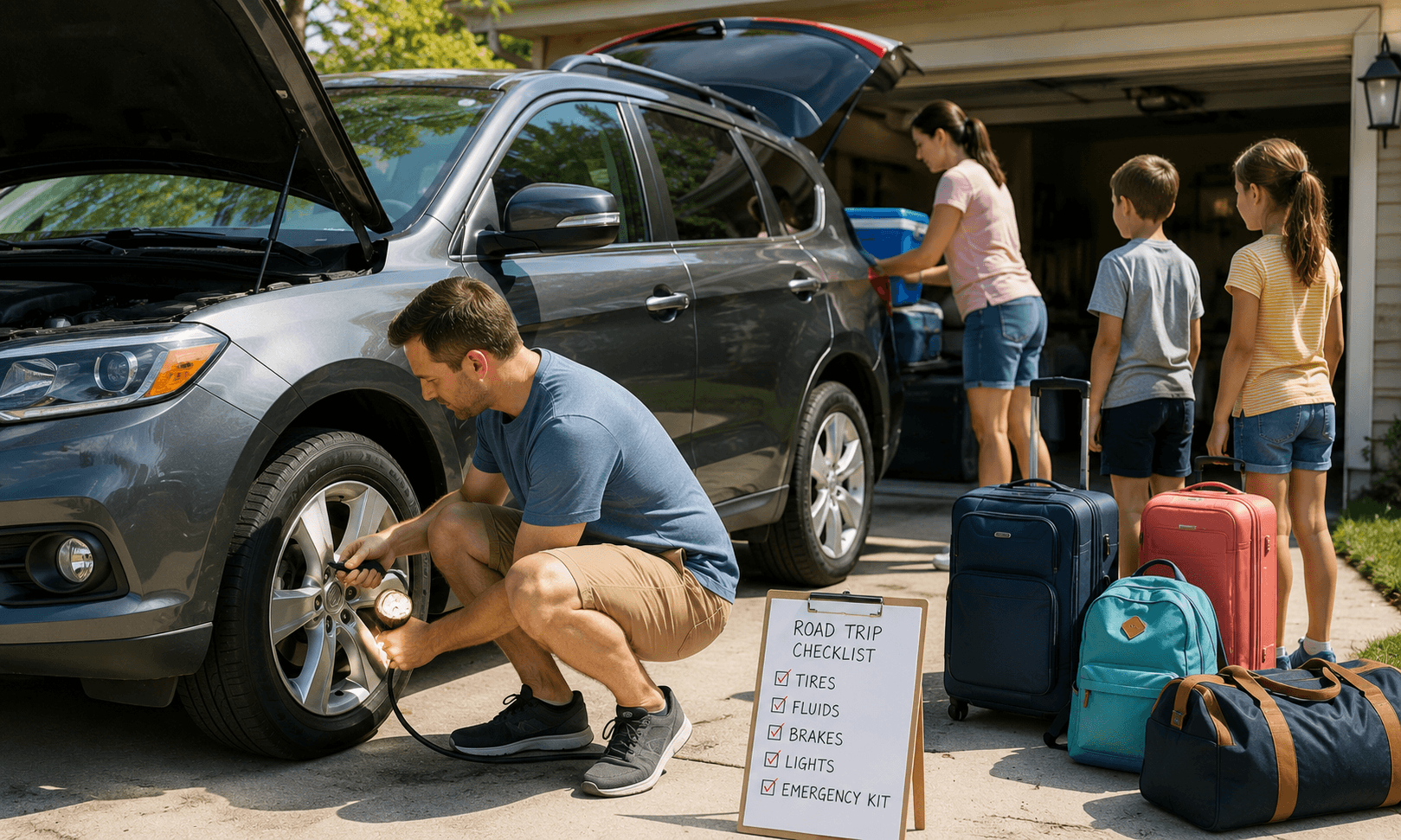
AAA responded to approximately 33 million roadside assistance calls last year. The most common breakdowns — dead batteries, flat tires, overheating engines, and lockouts — are overwhelmingly preventable with a 15-minute inspection before you leave. Here are five things to check.
1. Tire pressure and tread depth — including the spare
Check all four tires plus the spare. The correct pressure is on the sticker inside the driver’s door jamb — not on the tire sidewall. Underinflated tires overheat on long highway drives, increase stopping distance, and reduce fuel economy by up to 3%. While you’re checking pressure, do the penny test on each tire: insert a penny into the tread with Lincoln’s head pointing down. If you can see the top of his head, the tire needs replacing before a 500-mile trip.
2. Engine oil level and condition
Pull the dipstick. If the oil is at or below the minimum mark, add oil before departing. If the oil is black, gritty, or smells burnt, schedule an oil change before the trip. Running an engine with insufficient or degraded oil on a hot summer highway is how a $50 oil change becomes a $5,000 engine replacement.
3. Coolant level
Summer highway driving in high temperatures is the maximum-demand scenario for your cooling system. Check the coolant reservoir — the translucent container near the radiator — and confirm the level is between the minimum and maximum marks with the engine cold. Low coolant plus high ambient temperature plus sustained highway speed equals overheating. Overheating equals engine damage.
4. Battery age and terminal condition
Car batteries last 3 to 5 years. If yours is approaching that window, have it tested at any auto parts store — the test is free and takes five minutes. Check the terminals for white or greenish corrosion. A battery that starts your car reliably for 15-minute commutes may fail after sitting in a hot parking lot for 8 hours at your destination.
5. Wiper blades and washer fluid
A summer rainstorm at highway speed with worn wiper blades is a visibility emergency. Replace blades that streak, skip, or chatter. Fill the washer fluid reservoir completely — a full tank weighs less than two pounds and lasts months. Running out behind a truck kicking up road grime at 70 mph is how windshields become opaque.
One bonus: check your emergency kit. Jumper cables or a jump starter pack, a flashlight, a first-aid kit, a phone charger, and a gallon of water should be in the trunk before any road trip. The 15 minutes you spend checking the car now is the tow truck you don’t need later.