Politics
Hours After Losing the Birthright Case the DOJ Ordered a Crackdown on Birth Tourism
By Mike Harper · July 1, 2026
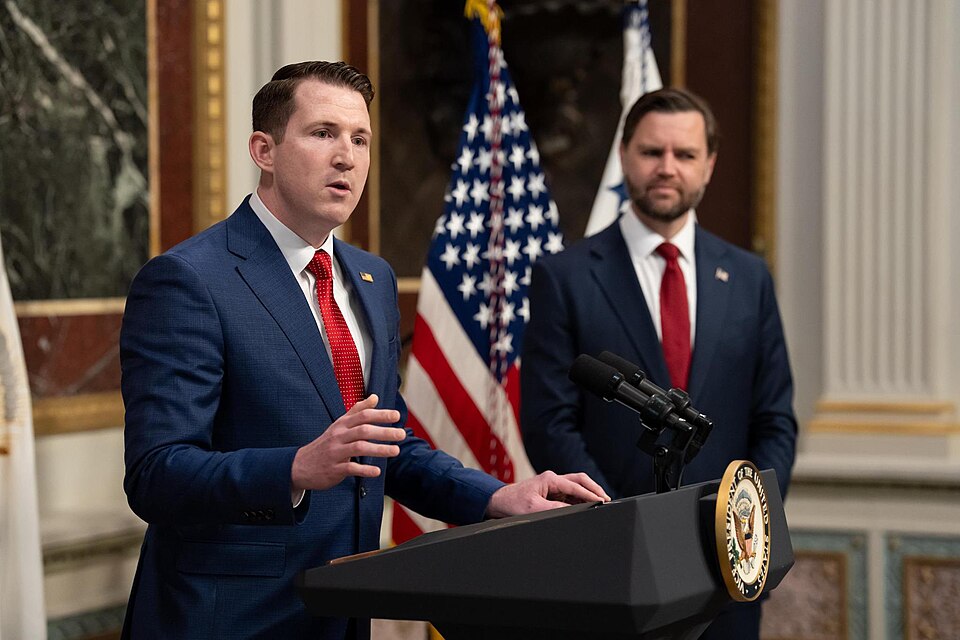
The Supreme Court said birthright citizenship stands. The Justice Department said it would find another way.
Within hours of Tuesday’s 6-3 ruling, Deputy Attorney General Colin McDonald issued a memo to all DOJ employees directing federal prosecutors to prioritize the investigation and prosecution of commercial birth tourism schemes. The memo instructs prosecutors to coordinate with the Department of Homeland Security and to pursue charges beyond traditional visa fraud — including money laundering, identity theft, wire fraud, and healthcare fraud.
“The Department of Justice will zealously protect the sanctity of United States citizenship by investigating and prosecuting those who fraudulently exploit our immigration system.”
The timing was not subtle. The administration lost its broadest tool — an executive order that would have denied citizenship to 255,000 babies per year — and within the same business day pivoted to a narrower enforcement strategy targeting the infrastructure that facilitates birth tourism.
Birth tourism refers to the practice of foreign nationals traveling to the United States specifically to give birth so their children receive American citizenship. The DOJ memo points to several previous prosecutions. Michael Wei Yueh Liu and Jing Dong each received 41 months for running “USA Happy Baby Inc.,” a California operation that helped Chinese clients obtain false visas, conceal pregnancies from border agents, and arrange housing. Ibrahim Aksakal received 27 months for a New York operation targeting Turkish speakers that provided scripts on how to evade immigration screening.
The legal distinction is important. The Supreme Court ruled that birthright citizenship is constitutionally protected — the government cannot deny citizenship to a child born on American soil. The DOJ memo does not challenge that. What it targets is fraud in the process of entering the country — lying on visa applications, concealing the purpose of travel, operating commercial enterprises that facilitate those lies.
Justice Clarence Thomas highlighted the birth tourism issue in his dissent from Tuesday’s ruling, arguing that the practice demonstrates the need for executive authority to limit birthright citizenship. The majority did not address birth tourism directly — the case was about constitutional interpretation, not immigration enforcement tactics.
The DOJ’s same-day pivot signals a broader strategy: if the Constitution prevents the administration from changing who gets citizenship, the Justice Department will focus on changing who gets into the country in the first place. Whether that approach produces meaningful enforcement results or serves primarily as a political signal will depend on how many cases prosecutors actually bring — and how the courts evaluate them.