Lifestyle
She Moved Into a Van at 65 Because She Couldn’t Afford a House or an Apartment. The Van Payment Still Takes a Third of Her Social Security
By Curtis Jones · November 23, 2026
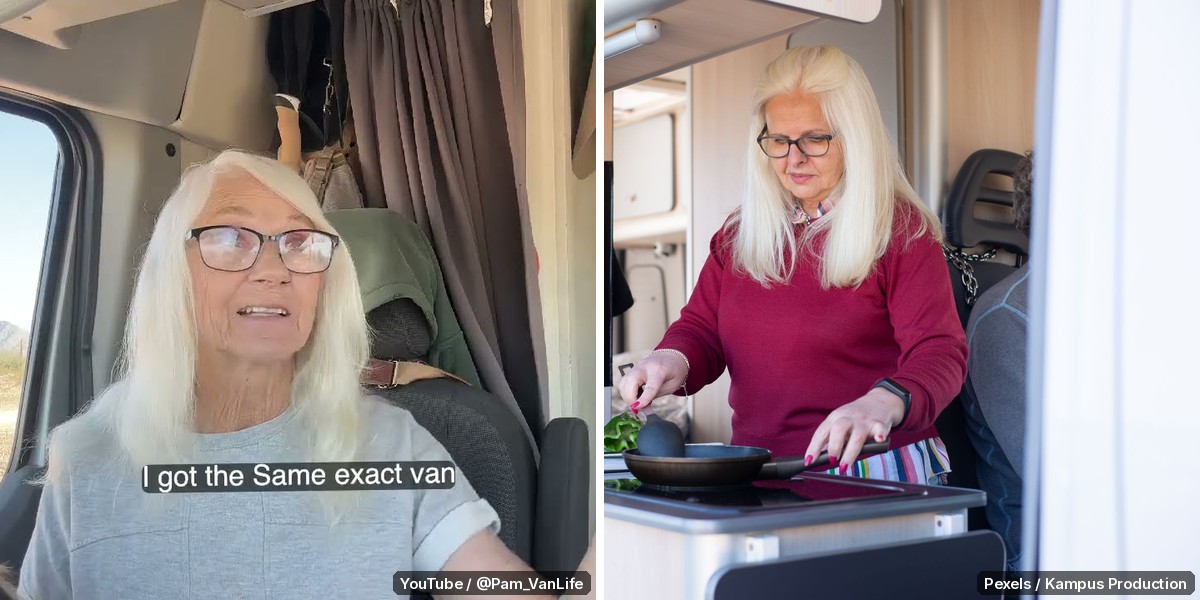
Pam, who posts on her YouTube channel Pam’s Van Life, did not move into a van for the adventure. She did it because the numbers left her few other choices.
“I couldn’t afford to live in a house. I couldn’t, I’d have to have six roommates also on social security,” she says in a video about living in a van on Social Security. “The price of apartments, I couldn’t live in an apartment either.”
Without other income or anyone to split expenses with, she says, “I am relegated to living in a van.” Then she adds the part that matters most to her: “Now, fortunately for me, I love it. I don’t want to live anywhere else.”
Her timeline is simple. “I moved into my van I was 65 years old. I got on Social Security in three weeks, I turned 66, and the reason I waited until I was 66 was because I like to work,” she says. She wanted to earn as much as she wanted without having to pay anything back.
She still has side jobs, and she is frank that they are not optional. “There is a difference however between liking to work and having to work,” she says. “I do actually have to work because my expenses are more than my Social Security.”
The biggest reason is the van itself. “I’m still paying for my van. My payment on my van takes up a third of my Social Security,” she says. Her advice to anyone thinking about it is blunt: don’t do that. Pay cash for a rig if you can.
Insurance surprised her too. She says that on a used van, insurance runs about three times as much as on a new one. “When I had my new van it was a thousand dollars a year,” she says. On a nearly identical used van, “my insurance is $3,000 a year.” She urges viewers to call their insurer and fit that cost into their monthly budget, along with health insurance and a phone bill.
To make the rest work, she does not pay for campsites. “I don’t pay to stay. I can’t afford to pay to stay,” she says. Her rule for others living only on Social Security is to plan on paying zero a month to stay. She also tells viewers to keep money set aside for repairs, after hearing of someone who lost a transmission and an engine and could not afford to fix them.
Her verdict has two sides. She loves the life and wants no other. But the loan means she has to keep working, and she tells viewers not to make the same move.
Readers who are thinking about working while collecting Social Security should know how the rules work. The Social Security Administration says that if you are under full retirement age for all of 2026, it holds back $1 in benefits for every $2 you earn above $24,480. In the year you reach full retirement age, it holds back $1 for every $3 above $65,160, counting only earnings before the month you reach that age. Once you reach full retirement age, which is 67 for anyone born in 1960 or later according to the SSA, there is no limit. Benefits withheld are not lost; SSA recalculates the benefit at full retirement age to credit those months.
Before buying a van or RV, it can also help to get insurance quotes for both new and used models and to price out repairs.
This article is for general information and is not financial or insurance advice. Pam’s story, figures and quotes are from her YouTube video; LightWave Reports has not reviewed her finances. This article was produced with the assistance of AI and fact-checked against the sources cited by LightWave Reports.