Business
The Iran War Reached Texas Barbecue — and Beloved Joints Are Closing Because of It
By Mike Harper · May 27, 2026
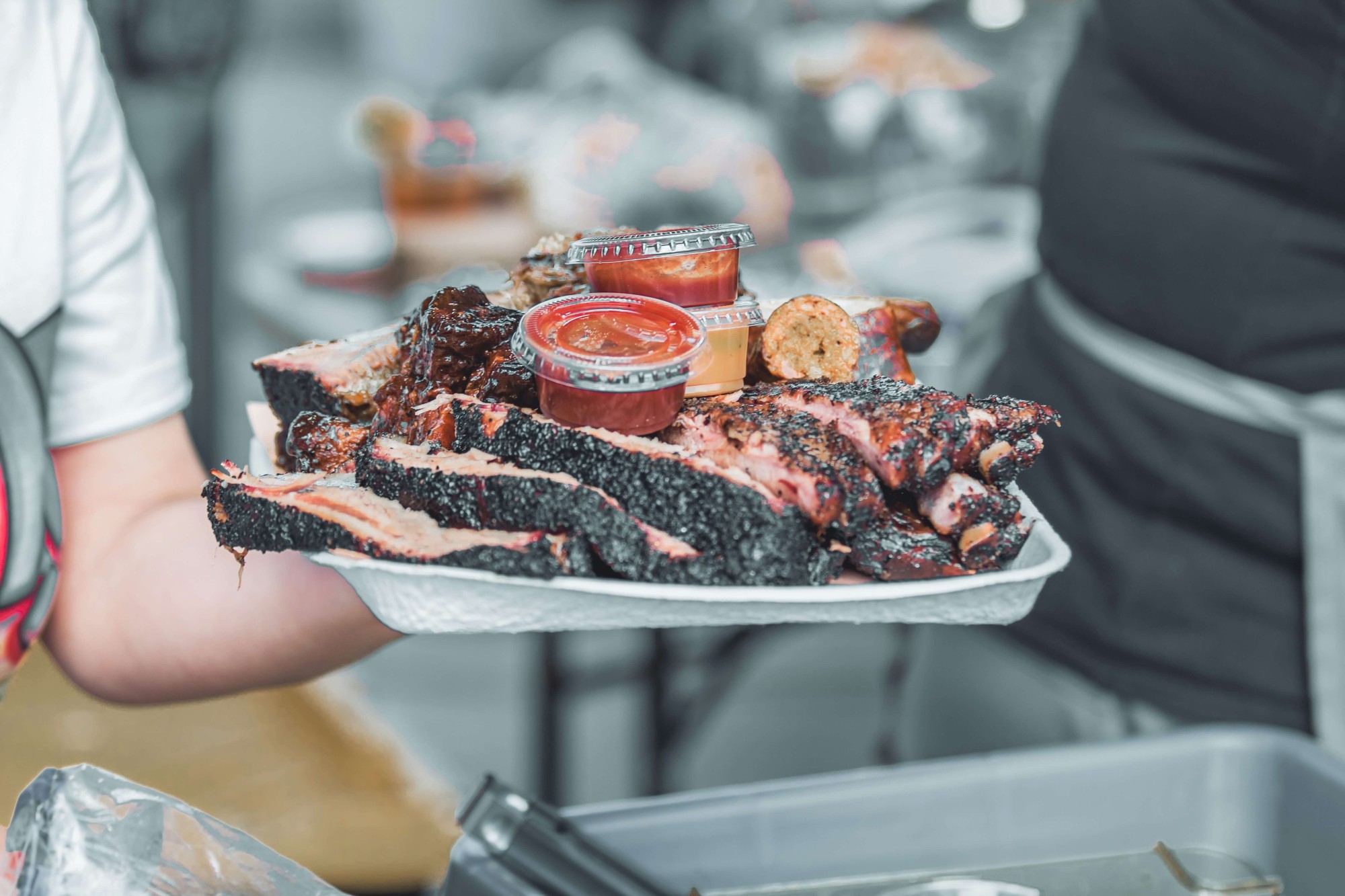
Russell Roegels has run his own barbecue restaurant in Houston since 2001. He’s served George H.W. Bush, NFL veterans, and Astros pitchers. He knows the numbers better than most people who have never cooked a brisket ever will.
This year, the number at the top of his spreadsheet was $5.56.
That’s what he pays per pound for brisket at wholesale — up 28 percent over the past year. To make the math work, he raised his menu price for brisket by $2 per pound, to $35. He held his breath and watched to see if his clientele would defect.
“This is as bad as it gets. Everybody’s at risk these days: You’re one bad week from closing.”
He isn’t exaggerating. The brisket crisis has already claimed some of Texas’s most beloved barbecue joints. Brett’s BBQ Shop in Katy — a Texas Monthly Top 50 honoree known for its oak-smoked brisket and house-made sausages — closed its doors. Kirby’s BBQ in the Houston suburb of New Caney is gone. Hill City Chop House in Tolar, after three years of operation, served its last plate on December 28. Texas Monthly’s barbecue editor Daniel Vaughn spoke to nine restaurant owners who had recently closed or were fighting to survive. The answer was the same at every table.
Ground beef now costs $6.70 a pound — up 15% from a year ago. Beef steaks sit at $12.73 a pound, up 16%. And the USDA is warning that prices could climb another 10 to 18% before the end of 2026.
The mechanics of how a barbecue restaurant works make the beef price spike uniquely devastating. Brisket is both the most popular and the least efficient cut — it loses approximately 40% of its weight during the long smoking process, meaning a restaurant pays for 10 pounds to serve roughly 6. Every price increase in the raw commodity hits twice as hard once the yield calculation is applied. And unlike a fast-casual restaurant that can quietly swap ingredients, Texas barbecue is the ingredient. You cannot substitute.
Justin Manning, co-owner of C&J Barbecue in Bryan, Texas, put it plainly.
“If you’re a barbecue restaurant, you don’t really have anywhere to move.”
“In Texas alone, we’re losing close to 1,000 acres a day to development. You take away the land, you don’t have the resource to raise the cattle. So it’s just simple economics — when the supply goes down, the price is going to go up.”
The US cattle herd is at its lowest level in 75 years. The Iran war’s effect on fuel and transport costs has layered onto that supply crisis. And a drought cycle that has persisted across much of cattle country for three years has reduced the number of animals that ranchers can sustainably maintain.
Trump signed two executive orders on beef imports earlier this month — suspending tariff-rate quotas to allow more Brazilian, Australian, and Argentine beef into the country at lower duty rates. Prior interventions — including a November waiver on Brazilian beef and an October action on Argentine supply — had not reversed the price trend. Analysts say meaningful relief at the wholesale level requires rebuilding the domestic herd, a process that takes years.
For the pitmasters still open, $35-a-pound brisket is not the ceiling. It is the current reality. The ceiling is wherever their customers stop coming through the door.