Business
American Efficient Defrauded Electricity Ratepayers Out of $500 Million Before Filing for Bankruptcy
By Mike Harper · July 23, 2026
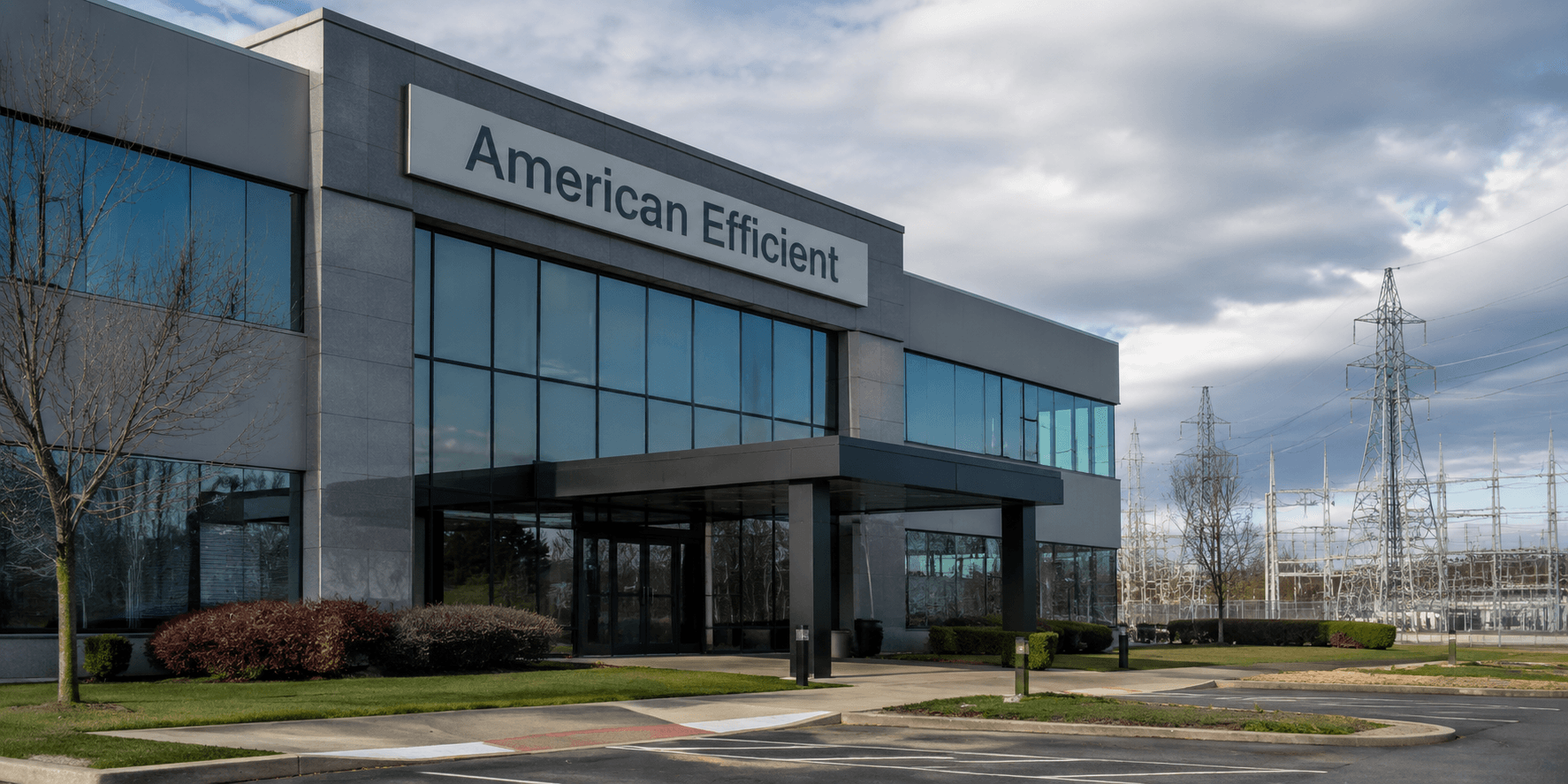
For more than a decade, American Efficient collected hundreds of millions of dollars from electric grid operators on the theory that it was helping Americans use less electricity. Federal regulators say it was doing nothing of the kind.
In April, the Federal Energy Regulatory Commission ordered the Durham, North Carolina company and its affiliates to pay $722 million in civil penalties and return more than $410 million in what the agency called “unjust profits” — together, more than $1.1 billion — after a five-year investigation concluded the company had stolen nearly $500 million from consumers through what FERC described as one of the largest and most brazen fraud schemes in the commission’s history.
On Wednesday, American Efficient filed for Chapter 11 bankruptcy protection. According to court filings reviewed by WUNC News, the company has assets of $1 million to $10 million and liabilities of $1.4 billion — meaning even if it sold everything it owned, it couldn’t cover a fraction of what it owes.
The fraud worked through a mechanism most ratepayers never see. American Efficient operated as an energy efficiency aggregator, purchasing sales data from Lowe’s, Home Depot, Walmart, and lighting distributors about energy-efficient products like refrigerators and LED light bulbs. It then calculated how much electricity those products were supposedly saving and sold the projected savings to regional grid operators — including PJM Interconnection, which manages the electricity grid for Washington, D.C., and all or parts of 13 states — at capacity market auctions.
The grid operators paid for those projected savings, and those costs were ultimately passed on to electricity ratepayers through their utilities. Over more than a decade, American Efficient collected hundreds of millions of dollars this way — including a $26 million performance bonus for supposedly saving energy during Winter Storm Elliott in 2022.
What FERC investigators actually found was that the payments American Efficient made to retailers were as little as 12 cents per refrigerator and even less per light bulb. There was no evidence these micro-payments encouraged stores to promote energy-efficient products to customers. And a former policy director at one of the company’s affiliated businesses told investigators that American Efficient “did not believe it was causing energy efficiency to occur, or that it did.”
“We’ve not been faced with a scam that robbed ratepayers of hundreds of millions of dollars in this way before.” FERC Commissioner Lindsay See said at a public meeting in April.
American Efficient denied wrongdoing throughout, calling FERC’s findings “meritless.” After the April ruling, the company declined to pay the penalty. When the 60-day payment window closed without payment, FERC was required to seek enforcement in federal district court — a process that would allow American Efficient to present evidence to a judge and jury.
The bankruptcy filing Wednesday complicates that enforcement path without resolving it. The case against the company can still proceed in federal court, where American Efficient retains the right to contest the penalty. If it prevails, the fine could be reduced or cancelled. If it loses, the question becomes how a company with $1 million to $10 million in assets satisfies a $1.1 billion judgment.
The managing director of American Efficient is married to a North Carolina state senator. Neither he nor the company responded to requests for comment Wednesday.