Business
The Fed Chair Said Inflation Is Still Too High and Rate Hike Odds Just Jumped to 56%
By Mike Harper · August 29, 2026
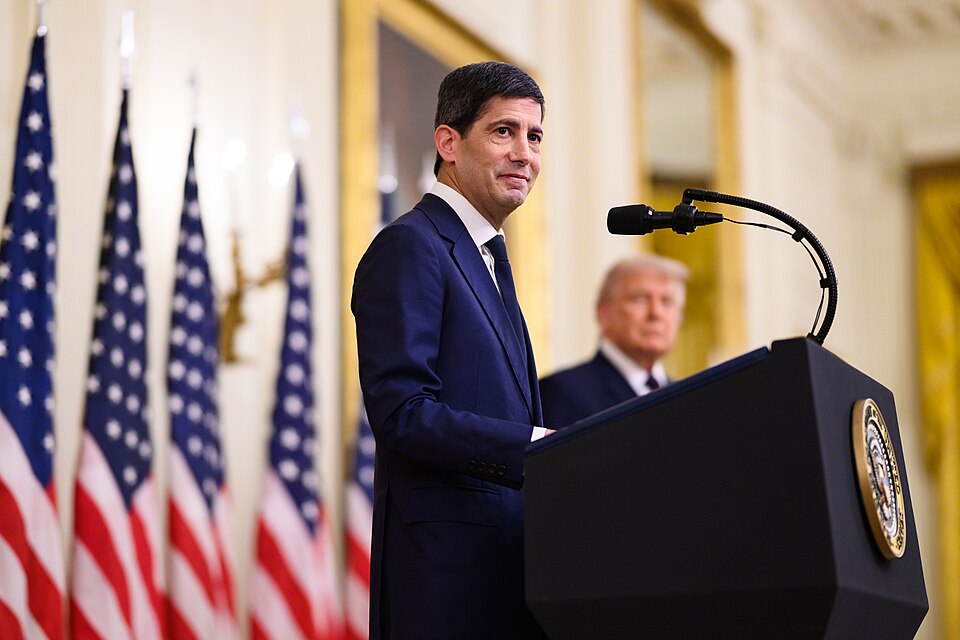
The man who controls interest rates stood at a podium in Wyoming on Friday and told the country that prices are still too high — and that he’s willing to make your borrowing costs even higher to bring them down.
Federal Reserve Chairman Kevin Warsh delivered his first speech at the Fed’s annual Jackson Hole symposium and sent the clearest signal of his six-month tenure: after 65 months of above-target inflation, the Fed has “work to do” — and interest rates are its tool.
“It’s the Fed’s job to deliver stable prices, no excuses.” Warsh said. “We must be confident that underlying inflation is moving to our objective, clearly and at sufficient speed. Otherwise, we have work to do.”
By midday Friday, the odds of a rate hike at the September 16 meeting jumped from 35% to more than 56%, according to the CME FedWatch Tool. Markets are now pricing in a roughly 75% chance of a hike by December. The three officials who voted for a rate increase at the July meeting have company — and the chairman appears to be joining them.
Here’s what that means for your wallet.
Credit card rates go up immediately. Credit card APRs are directly tied to the federal funds rate through the prime rate. A quarter-point hike would push the average credit card APR above 21%. For the average household carrying $6,500 in credit card debt, that’s roughly $160 more in annual interest. Multiple hikes compound the cost further.
Adjustable-rate mortgages and HELOCs reset higher. Anyone with a variable-rate mortgage or home equity line of credit would see their monthly payment increase with each hike. A $200,000 HELOC balance at the current rate costs roughly $750 per month in interest. A quarter-point increase adds about $42 per month — $500 per year.
Fixed-rate mortgage shoppers face more uncertainty. The 30-year Treasury yield hit its highest level in 19 years last week, and mortgage rates have been hovering above 6.5%. Warsh’s hawkish tone could push them higher. For every quarter-point increase in mortgage rates, a buyer financing $350,000 pays roughly $60 more per month — $720 per year — for the life of the loan.
Auto loan rates climb too. New car loan rates are already at 8.4% for 60-month terms and 8.8% for 72-month terms. A rate hike pushes them higher, adding $15 to $25 per month on a $35,000 vehicle — money that comes directly out of the buyer’s monthly budget.
The inflation driving this decision has multiple sources: the Iran war pushed energy prices up 37% since February, tariffs have raised import costs, and the July PCE reading — the Fed’s preferred inflation gauge — came in at 3.7% on an annual basis, nearly double the 2% target. Warsh said the 2% target is “firm” and “fixed” and will not change.
Forbes economist Bill Conerly wrote Friday that he expects “a series of interest rate hikes in the coming months” based on Warsh’s remarks. The next decision arrives September 16. Nineteen days from today, the cost of borrowing money in America could go up — and the man at the podium just told you he thinks it should.