World
The US Struck Iran and Negotiated a Peace Deal in the Same Morning
By Mike Harper · May 26, 2026
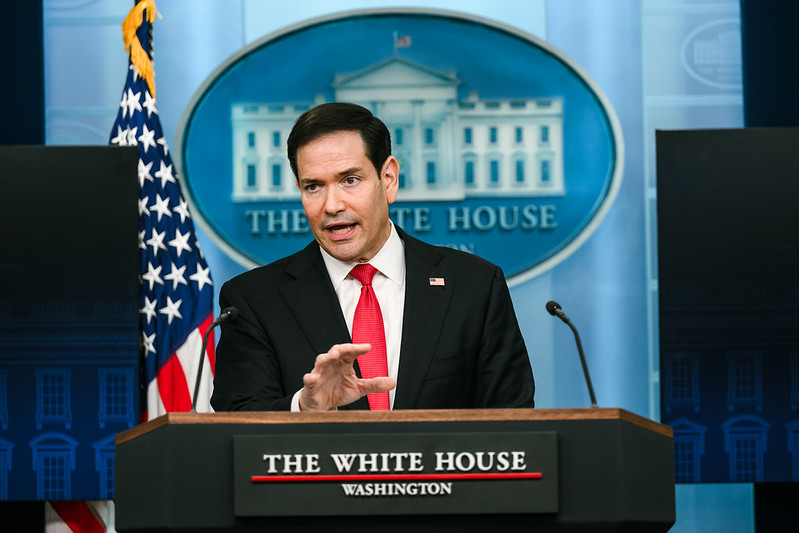
On Tuesday morning, US forces struck Iranian military positions along the coast of Hormozgan province in southern Iran. On Tuesday afternoon, Secretary of State Marco Rubio told reporters the United States was “making progress” toward a peace deal and expected to have one within “a few days.” Both things happened on the same day.
Iran’s Foreign Ministry called the strikes a “gross violation” of the ceasefire that has been nominally in place since April 8. Iran’s military said it had fired drones and missiles at Gulf states hosting US bases in response. The US said the strikes were defensive — targeting Iranian boats it accused of attempting to place mines in the Strait of Hormuz and missile launch sites that posed a threat to naval operations. Rubio, speaking to reporters at Jaipur International Airport in India, used the word “self-defense.”
“The straits have to be open. They’re going to be open one way or the other.”
He said talks were continuing in Qatar even as the strikes were underway.
“There were some talks going on in Qatar today, so we’ll see if we can make progress. I think it’s a lot of talking back and forth going on about specific language in the initial document, so it’ll take a few days.”
The specific language dispute blocking a final agreement involves the sequencing of the Strait of Hormuz reopening. The US wants the strait reopened as part of or before a formal agreement is signed. Iran wants guarantees — including the permanent lifting of the naval blockade and security assurances against future strikes — before it agrees to resume normal shipping. That sequencing dispute has been the wall every round of negotiation has hit since February 28.
The British Navy announced this week it is preparing mine-clearance operations in the Strait of Hormuz, anticipating that a deal will require immediate de-mining operations for the waterway to safely reopen to commercial traffic. A few dozen vessels are currently passing through the strait daily, compared with 125 to 140 previously — a reduction that has contributed to the oil supply shock pushing gas prices to $4.39 nationally and inflation to 3.8% annually.
Trump, for his part, has been characteristically binary about the outcome.
“He’s going to make a good deal or no deal, so on that everyone should be assured.”
Netanyahu, meanwhile, has been frozen out of the US-Iran negotiations entirely — a development Israeli media has described as an unprecedented diplomatic rupture between the two governments. Israel launched the initial strikes on Iran on February 28 alongside US forces, and its military objectives — primarily the permanent elimination of Iran’s nuclear capability — diverge from the US objective of reopening the strait and ending the oil shock. Any deal that leaves Iran’s nuclear program intact but restores shipping is a deal Netanyahu has publicly said he cannot support. He is not at the negotiating table.
The war that began nearly three months ago with the largest US military operation since Iraq is ending, if it ends, with a phone call from Rubio in an Indian airport telling reporters it will take a few more days.