Politics
Trump Bets Big on Missiles and Naval Power in Latest Defense Plan
By CM Chaney · April 4, 2026
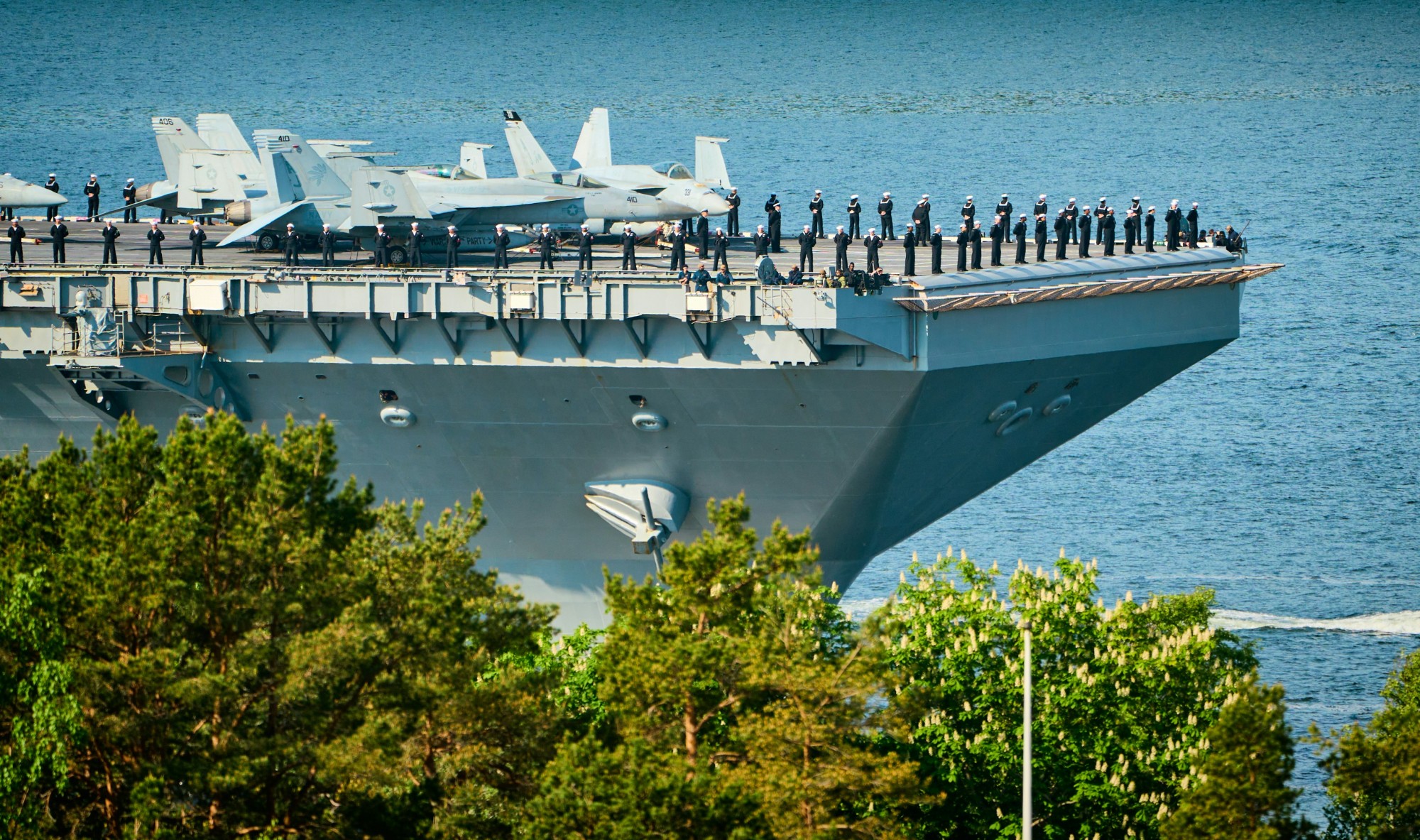
A new defense budget proposal from President Donald Trump puts a clear emphasis on missile systems and naval expansion, reinforcing a direction that has been building over multiple funding cycles rather than introducing anything that feels like a sharp pivot.
Details outlined in reporting from Reuters show the proposal directing significant resources toward large-scale military systems, including missile infrastructure and expanded shipbuilding. Coverage from The Associated Press points to a similar pattern, noting that recent defense priorities have steadily leaned in this direction.
So this doesn’t exactly land as a surprise.
If anything, it feels like a continuation—just with more weight behind it.
Missile systems and naval power have long been central to U.S. military strategy. They’re visible. They’re measurable. And they tend to carry a certain clarity when it comes to deterrence. A larger fleet or expanded missile capability sends a straightforward signal, both domestically and internationally.
That clarity matters.
But it also comes with trade-offs, even if those trade-offs aren’t always front and center.
Defense budgets don’t operate in a vacuum. Prioritizing large-scale systems—ships, missiles, long-term infrastructure—means other areas are competing for what remains. That includes emerging technologies, cyber capabilities, and smaller, more flexible approaches that don’t always carry the same immediate visibility.
And those decisions don’t always land cleanly.
There’s also a broader signaling effect. Defense spending isn’t just about capability—it’s about communication. Other countries pay attention to where funding is going, especially when it reinforces existing strengths instead of shifting toward newer strategies.
That interpretation can carry weight, even if it’s not always the intention.
For now, the proposal suggests a continued preference for scale and presence. Large systems. Long timelines. Investments that reinforce established military posture rather than redefine it.
That doesn’t mean there’s no room for adjustment.
Because there almost always is.
Congress still has a role to play, and proposals like this rarely move forward unchanged. Lawmakers tend to reshape priorities, reallocate funding, and push back on areas where the balance doesn’t quite line up.
And that process can matter as much as the proposal itself.
So while the direction is relatively clear—leaning into traditional military strength—the final outcome is still taking shape.
That part isn’t settled yet.
And until it is, the proposal functions more as a signal than a finished product.