Politics
Trump Threatens 50% Tariffs on Nations Arming Iran
By Mike Harper · April 9, 2026
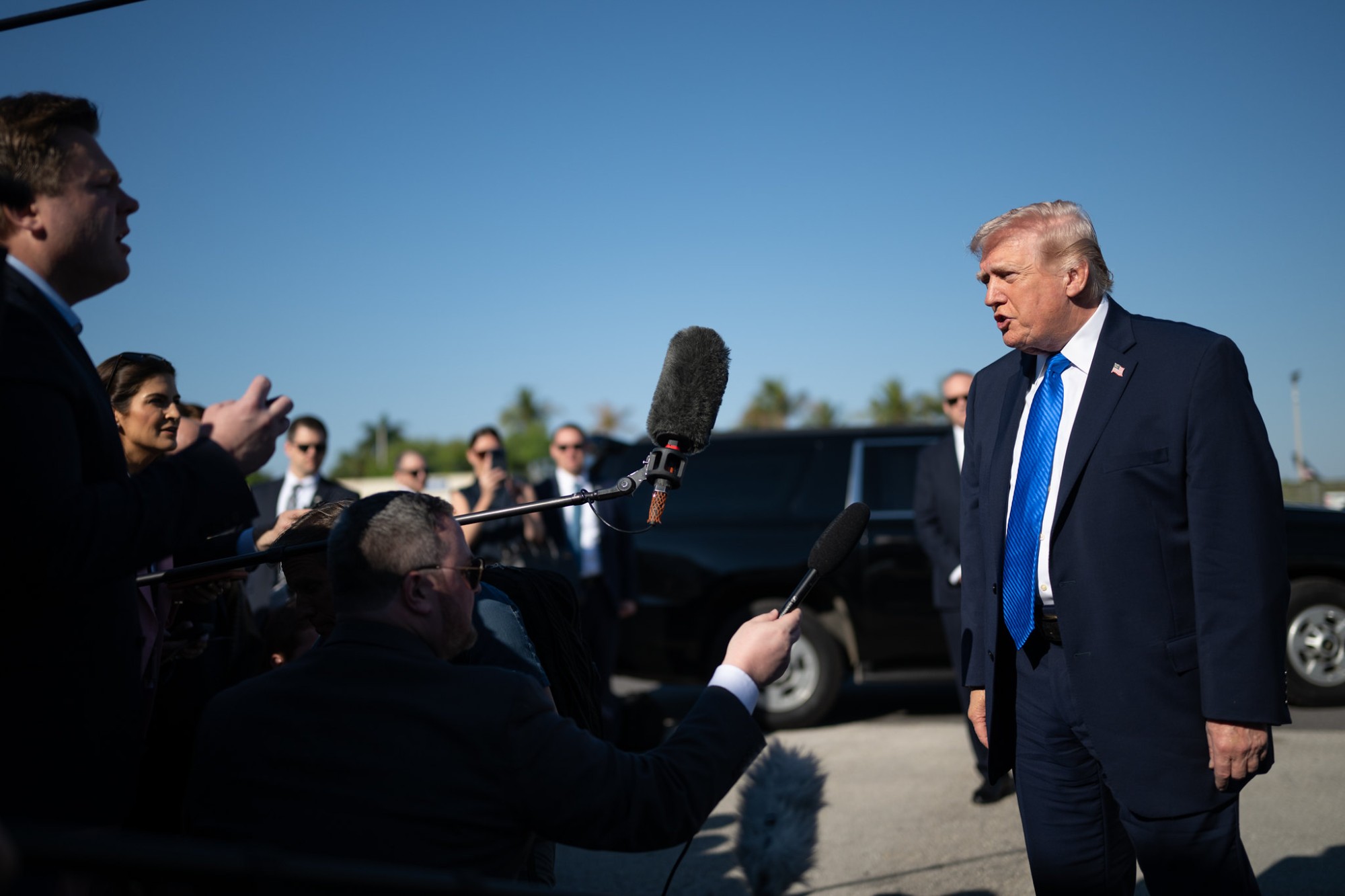
President Donald Trump escalated his tariff threats Wednesday, warning that any country supplying military weapons to Iran would face an immediate 50 percent levy on all goods exported to the United States — no exceptions, no exemptions.
The announcement came via Truth Social, just hours after the White House confirmed a two-week ceasefire agreement with Tehran. Trump also said in a separate post that his administration is “talking Tariff and Sanctions relief with Iran,” following the ceasefire deal under which Tehran agreed to temporarily reopen the critical Strait of Hormuz.
The timing was deliberate. The threat arrived not as diplomacy was breaking down — but as it was, cautiously, moving forward.
Trump’s Truth Social post warned that any country found to be supplying Iran with weapons would be subject to the levy “immediately,” with “no exclusions or exemptions.” He did not name any specific countries in the post.
That part matters. Because the countries most clearly implicated — China and Russia — are not minor trade partners. According to Al Jazeera, both Beijing and Moscow have denied supplying weapons to Iran recently, though allegations against Moscow have persisted. China and Russia have helped Iran build military capacity over time — supplying missiles, air-defense systems, and technology — though that support appeared capped during the U.S.-Israeli attacks on Iran.
And there’s a broader complication lurking beneath the headline.
The Supreme Court ruled in February that Trump overstepped his authority in using the International Emergency Economic Powers Act to impose broad global tariffs — a decision that prompted a lower court to order refunds of roughly $166 billion in previously collected duties. The 1977 IEEPA law had been used for decades to back financial sanctions, but the court drew a hard line between sanctions and trade tariffs.
Rachel Ziemba, adjunct senior fellow at the Center for a New American Security, put it plainly. “It’s a lot more complicated to do that after IEEPA was struck down,” she told Al Jazeera. “There’s no immediate policy lever and authorisation that is available for the US to do that. So they need either an act of Congress or need to adapt some other trade tool, and there isn’t really a national security-oriented trade tool.”
Alternative legal routes exist, but none are quick. Tools like Section 301 or Section 232 would require specific investigation periods and public notices before any new tariff could take effect. That creates a real gap between what Trump announced and what can actually be implemented.
That’s where this gets complicated. The administration is simultaneously praising Beijing’s diplomatic role in brokering the Iran ceasefire — Trump told reporters he believed China helped get Tehran to the negotiating table — while threatening tariffs that would, in practice, fall most heavily on Beijing if enforced. The two positions don’t sit easily together, especially with a planned Trump-Xi meeting scheduled for next month.
The broader tariff picture adds context. The overall average effective U.S. tariff rate stood at around 13.7 percent in February 2026, down sharply from an estimated 47 percent peak reached between January and April 2025 — the direct result of the Supreme Court’s IEEPA ruling. The administration has since been rebuilding its tariff architecture through Section 232 and Section 301 mechanisms.
Whether Wednesday’s threat becomes enforceable policy or remains a pressure tactic is genuinely unresolved. Trump’s tariff announcements have frequently functioned as opening positions — sometimes followed through, sometimes withdrawn, often renegotiated. This one carries an added layer of legal uncertainty that previous threats did not.
What’s clear is the strategic logic at work. The administration is using economic leverage to shape behavior around an active military situation — effectively extending tariff policy into the domain of arms control and geopolitical alignment. That’s a different kind of trade threat than anything in the prior playbook.
Whether Congress, the courts, or U.S. trading partners respond — that’s the next chapter.