World
South Korea’s Former First Lady Is Going to Prison. Her Husband’s Already There
By Mike Harper · May 5, 2026
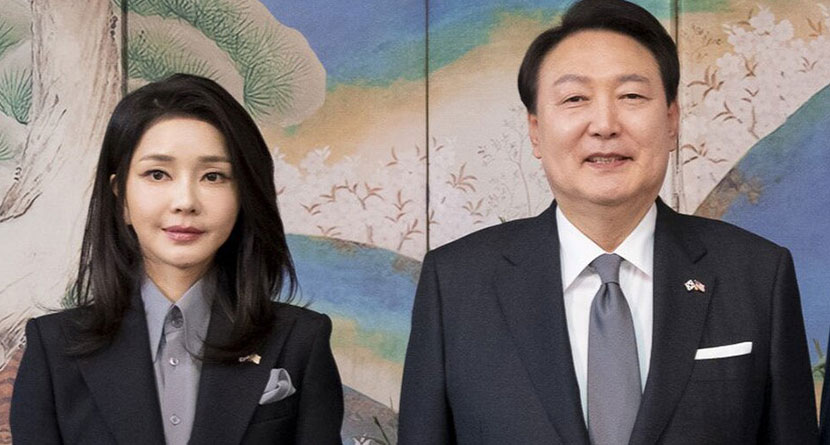
South Korea’s former first couple is going to prison together.
An appeals court has increased to four years the sentence for former First Lady Kim Keon Hee for corruption — weeks after her husband, former President Yoon Suk Yeol, was sentenced to life in prison for rebellion. The Seoul High Court ruling on April 28 more than doubled her original sentence and escalated a legal reckoning that has now consumed both members of the family that occupied South Korea’s highest office less than two years ago.
In January, Kim had been sentenced to 20 months in prison for receiving gifts including a Graff diamond necklace and a Chanel bag from the Unification Church, which sought political favors from the government. She had been acquitted of involvement in a stock price manipulation scheme. Both sides appealed.
The Seoul High Court gave prosecutors almost everything they asked for. It convicted Kim of receiving an additional Chanel bag from the Unification Church and reversed the lower court’s acquittal on the stock manipulation charge — finding she had participated in manipulating the price of a thinly traded Korean stock before she became first lady. The total value of gifts she accepted from the church — two Chanel bags and a Graff diamond necklace — was approximately 80 million won, or roughly $54,000.
Kim has been in jail since August, when a court approved her arrest warrant citing the risk she might destroy evidence. Her lawyers have now filed an appeal to the South Korean Supreme Court, meaning the case is not fully resolved. The independent counsel who prosecuted her had requested a 15-year term.
The collapse that produced both prison sentences began on a single night. On December 3, 2024, Yoon abruptly imposed martial law and sent troops and police officers to the National Assembly, saying he aimed to eliminate “anti-state forces”. The martial law lasted six hours — the assembly voted it down unanimously — and the political unraveling that followed was swift. Yoon was impeached, removed, arrested, tried, and sentenced to life in prison for rebellion. All within 18 months.
Kim’s troubles predate the martial law crisis. When Yoon was still in office, the designer handbag scandal, the stock manipulation allegations, and her proximity to government decisions had already eroded his approval rating and handed his opponents a sustained line of attack throughout his presidency. She was a liability before she was a defendant.
The message the South Korean judiciary is sending with both verdicts is not subtle: proximity to power does not protect you from accountability for how you use it. Whether that message fully lands will depend on what the Supreme Court decides when Kim’s appeal reaches it. For now, South Korea’s former first couple occupies adjoining places in the country’s penal system.