Politics
The Agents Who Took a Bullet Saturday Night Won’t Get a Paycheck Friday
By Mike Harper · April 28, 2026
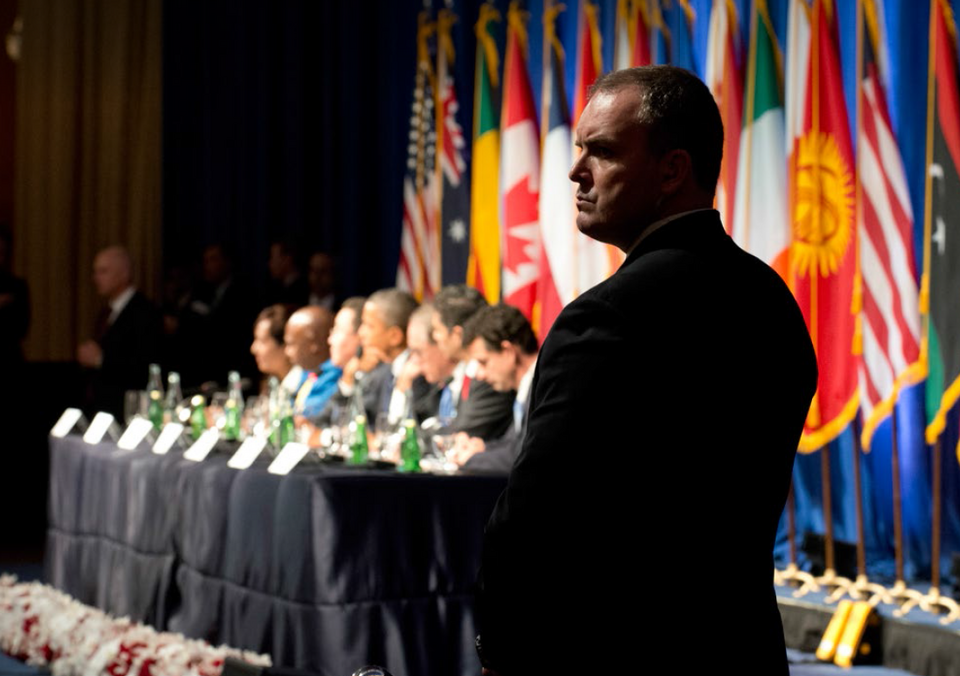
The Secret Service agent who was shot at the White House Correspondents’ Dinner on Saturday night — and survived because he was wearing a bulletproof vest — is among the federal workers who will not receive a paycheck on Friday if Congress fails to act this week.
House Republicans are returning to Washington facing what their own members are calling a “nightmare week,” with three separate must-pass legislative fights colliding simultaneously: a DHS funding shutdown now in its tenth week, a FISA surveillance authority that expires on Thursday, and a farm bill that has angered a new faction of the GOP. None of the three have the votes they need to pass as of Monday evening.
The DHS funding gap is the longest-running of the three crises. Federal immigration enforcement agencies — ICE and CBP — have been without full funding since February, the result of a standoff in which Democrats refused to authorize their budgets without reforms to how agents operate, following the January deaths of two U.S. citizens shot by federal immigration officers in Minneapolis. The standoff has forced DHS to operate under a series of short-term patches that have kept most of the department running but left key personnel in a prolonged state of payroll uncertainty.
The Secret Service is among those affected. The agency that protects the president — whose agents physically intercepted Cole Tomas Allen at the Washington Hilton on Saturday, and one of whom absorbed a shotgun blast to his bulletproof vest to keep Trump safe — is now preparing to issue zero-dollar paychecks to its officers if the funding gap extends through Friday’s pay cycle.
Representative Don Bacon of Nebraska, who represents a competitive district and has been among the most vocal critics of his own party’s dysfunction, put it plainly.
“Let’s stop doing the pretzel twister game with Republicans who never want to get to yes anyway,” Bacon told CNN. “We are trying to accommodate 20 people. This is what is broken about Congress.”
The twenty people Bacon is referring to are the conservative Freedom Caucus members whose objections have blocked Johnson’s FISA proposal in its various forms. They oppose the three-year extension Johnson has proposed — not because they want FISA to expire, but because they want a warrant requirement that prevents federal law enforcement from searching Americans’ communications gathered under the program without specific court approval. Johnson’s latest bill does not include that provision. The Freedom Caucus says they will not vote for any bill that doesn’t. The math leaves Johnson short.
FISA’s Thursday expiration is theoretically less catastrophic than it sounds. The FISA Court approved surveillance certifications in March that run through March 2027 regardless of what happens to the statute. But intelligence officials have warned that technology companies, uncertain about their legal obligations during a statutory lapse, might refuse to comply with collection directives — creating real-world gaps even if the legal machinery technically still runs.
The third fight — the farm bill — has added a new pressure point from an unexpected direction. The Make America Healthy Again bloc of Republicans, aligned with Health Secretary Robert F. Kennedy Jr.’s agenda, has objected to provisions they say conflict with his priorities on food and nutrition policy. Their opposition threatens a vote count Johnson was counting on from a completely different part of the caucus than his FISA rebels.
The cumulative picture is of a speaker with almost no margin for error managing three separate rebellions at once, against the backdrop of a weekend assassination attempt and a DHS workforce on the verge of missing pay. The agents who ran toward the shooter on Saturday night will find out whether their government can find the votes to pay them by end of business Thursday.