World
Iran’s Ultra-Hardliner Takes Over Nuclear Talks as Ceasefire Holds
By Mike Harper · April 27, 2026
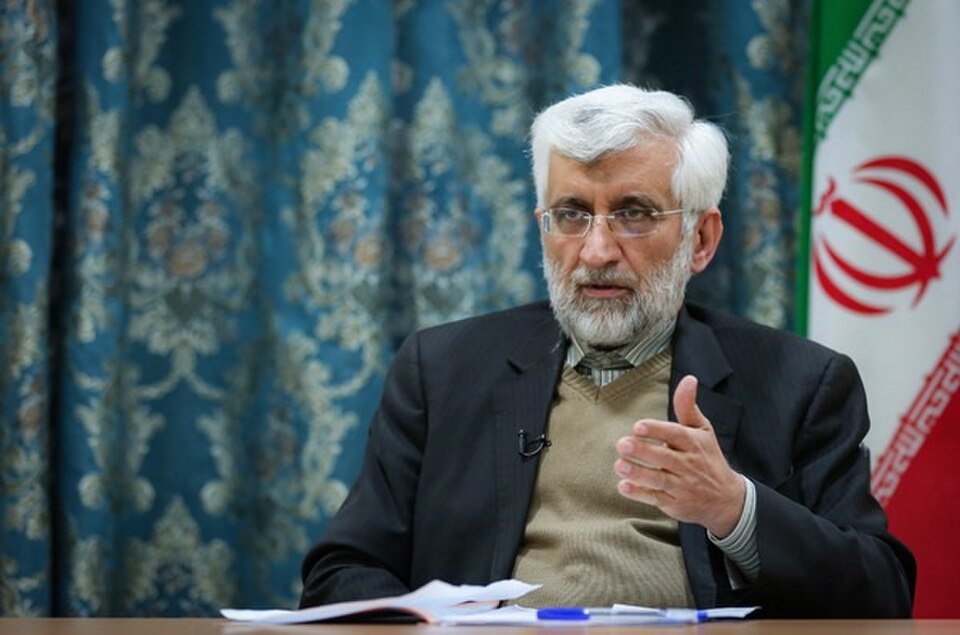
Just as the United States and Iran appeared to be searching for a path toward a permanent ceasefire, Iran’s internal power structure shifted — and the man now in charge of nuclear negotiations is among the most uncompromising figures in the Islamic Republic’s political establishment.
Saeed Jalili, Iran’s former nuclear negotiator and a three-time presidential candidate who has built his career on rejecting Western demands, has taken de facto control of Iran’s negotiating posture following a significant internal reshuffling triggered by the ongoing war and ceasefire uncertainty. The shift sidelines Foreign Minister Abbas Araghchi, who had been leading the Islamabad talks with U.S. envoys, and replaces him with a figure whose entire public record is opposition to the kind of deal the United States is demanding.
Jalili is not a new name in these negotiations. He served as Iran’s chief nuclear negotiator from 2007 to 2013, a period during which no deal was reached. He ran for president three times on a platform of resistance to Western pressure. When the 2015 nuclear deal — the JCPOA — was being negotiated, Jalili publicly opposed it. His political identity is built entirely around the position that Iran should not surrender its nuclear program, its missile capabilities, or its regional alliances in exchange for economic relief.
That is precisely what the United States is demanding as the price of a permanent ceasefire.
The internal Iranian dynamic that produced this shift is the same one Trump identified publicly last week when he described Iran’s government as “seriously fractured.” The civilian government — led by Parliament Speaker Mohammad Bagher Ghalibaf and Araghchi — had been attempting to negotiate while the Islamic Revolutionary Guard Corps, which controls Iran’s military and much of its economy, has resisted terms it views as capitulation. Jalili’s elevation reflects the IRGC faction gaining the upper hand over the civilian diplomatic track.
For the United States, the practical implication is that the negotiating team across the table has changed fundamentally. Araghchi, whatever his limitations, was a career diplomat who understood the mechanics of a deal. Jalili is a politician whose domestic brand depends on refusing one.
Vice President JD Vance’s planned trip to Islamabad for a second round of talks was already on hold before this development. It is now further complicated by the question of whether the person Iran sends to that table has any authority — or any inclination — to close a gap that has so far resisted every attempt at resolution.
The ceasefire Trump extended indefinitely last week remains in place. The naval blockade of Iranian ports also remains. The Strait of Hormuz, through which 20% of the world’s oil flows, remains effectively closed. And the clock that stopped ticking when Trump announced the extension has no public deadline — meaning the indefinite ceasefire could hold while both sides maneuver, or collapse the moment one side decides the other is not negotiating in good faith.
With Jalili now in the chair, that calculation just got significantly harder.