Business
Jerome Powell Refused to Leave the Fed Board. The Four Dissents Explain Why That Matters.
By Mike Harper · April 30, 2026
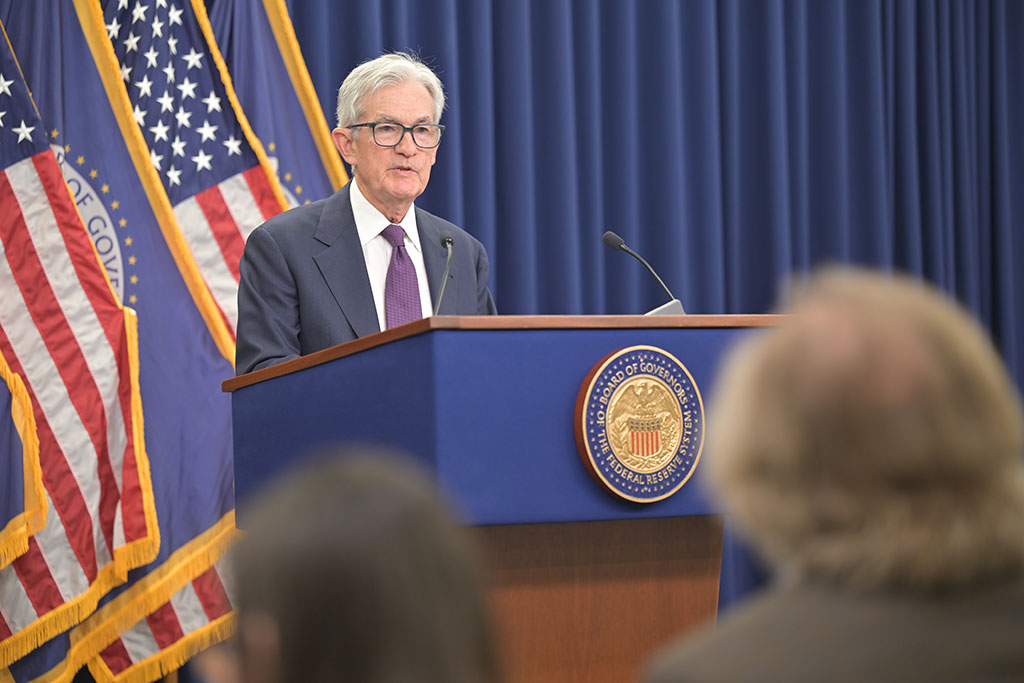
Jerome Powell chaired his last Federal Reserve meeting on Wednesday. He held rates steady, announced he would refuse to fully step down, and watched his committee fracture in the most dramatic dissent vote in 34 years. For Kevin Warsh — the man Trump has nominated to replace him — it was a preview of exactly what is waiting.
The Federal Open Market Committee voted to hold the benchmark federal funds rate at 3.5% to 3.75% for the third consecutive meeting, citing elevated inflation driven in large part by the Iran war’s impact on global energy prices. The decision came with four dissents — the most since October 1992 — and the dissents told two different stories simultaneously.
Three Fed presidents — Beth Hammack of Cleveland, Neel Kashkari of Minneapolis, and Lorie Logan of Dallas — supported the rate decision itself but objected to language in the policy statement suggesting future cuts might be coming. They wanted the Fed to communicate a neutral stance, signaling that a rate hike is as likely as a cut given current inflation dynamics. That position is a direct rebuke of what Trump has been demanding for months: aggressive rate cuts to juice the economy before November’s midterms.
The fourth dissent came from Stephen Miran — Trump’s own nominee to the Fed board — who voted for an immediate rate cut.
The split is a precise map of the coalition Warsh will inherit. Three hawkish regional presidents who think the bar for cuts is higher than the current policy statement acknowledges. One Trump loyalist pushing for cuts immediately. And a majority that split the difference and held steady. Getting that committee to agree on the aggressive rate cuts Trump wants is, as Axios put it, going to be very difficult.
The more immediate drama was Powell himself. In his press conference — his last as chair before his term expires May 15 — Powell announced he would remain on the Federal Reserve’s board of governors for an indefinite period rather than stepping down entirely. His stated reason: a Justice Department criminal investigation into the Fed’s headquarters renovation, which Powell has been contesting in court.
“I’m waiting for the investigation to be well and truly over, with finality and transparency,” Powell said. “I will leave when I think it appropriate to do so.”
The DOJ had announced last Friday that it was closing the investigation. But the U.S. Attorney handling it added that she “would not hesitate to restart” it if warranted. The White House’s own press secretary then said “the case is not necessarily dropped.” Trump told reporters over the weekend that “it’s not dropped.” Powell, watching those signals, concluded that the investigation was not in fact resolved — and chose to stay.
The practical consequence is significant. By remaining on the board, Powell denies Trump the ability to immediately appoint a replacement governor and further reshape the institution. A Fed chair who steps down from the board typically allows the sitting president to fill that seat. Powell is making that unavailable until the investigation is genuinely resolved to his satisfaction.
Powell has served as Fed chair since 2018. His term as governor runs through January 2028. If he remains on the board for any meaningful period after May 15, it would be the first time since Marriner Eccles — who chaired the Fed from 1934 to 1948 — that a departing chair stayed on as a governor.
Earlier Wednesday, the Senate Banking Committee advanced Warsh’s nomination on a party-line vote, clearing the final committee hurdle before a full Senate confirmation vote. Warsh is expected to be confirmed. He will then lead a committee where three of the twelve voting members just publicly signaled they don’t want the rate cuts he has promised to deliver — and a predecessor who may be watching from the same boardroom table.